Planning Your Visit to Drottningholm Palace: Stockholm’s Versailles on the Lake
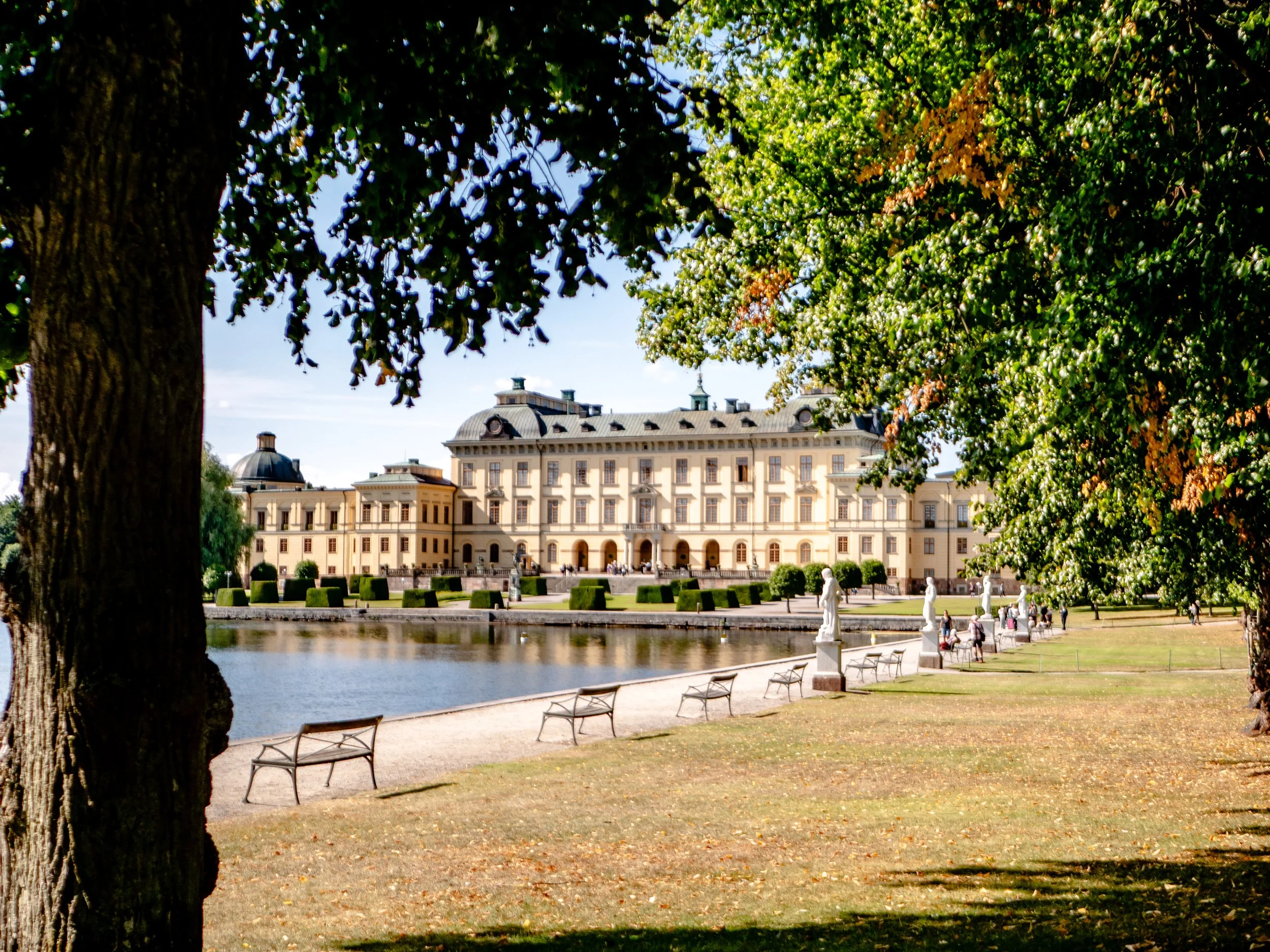
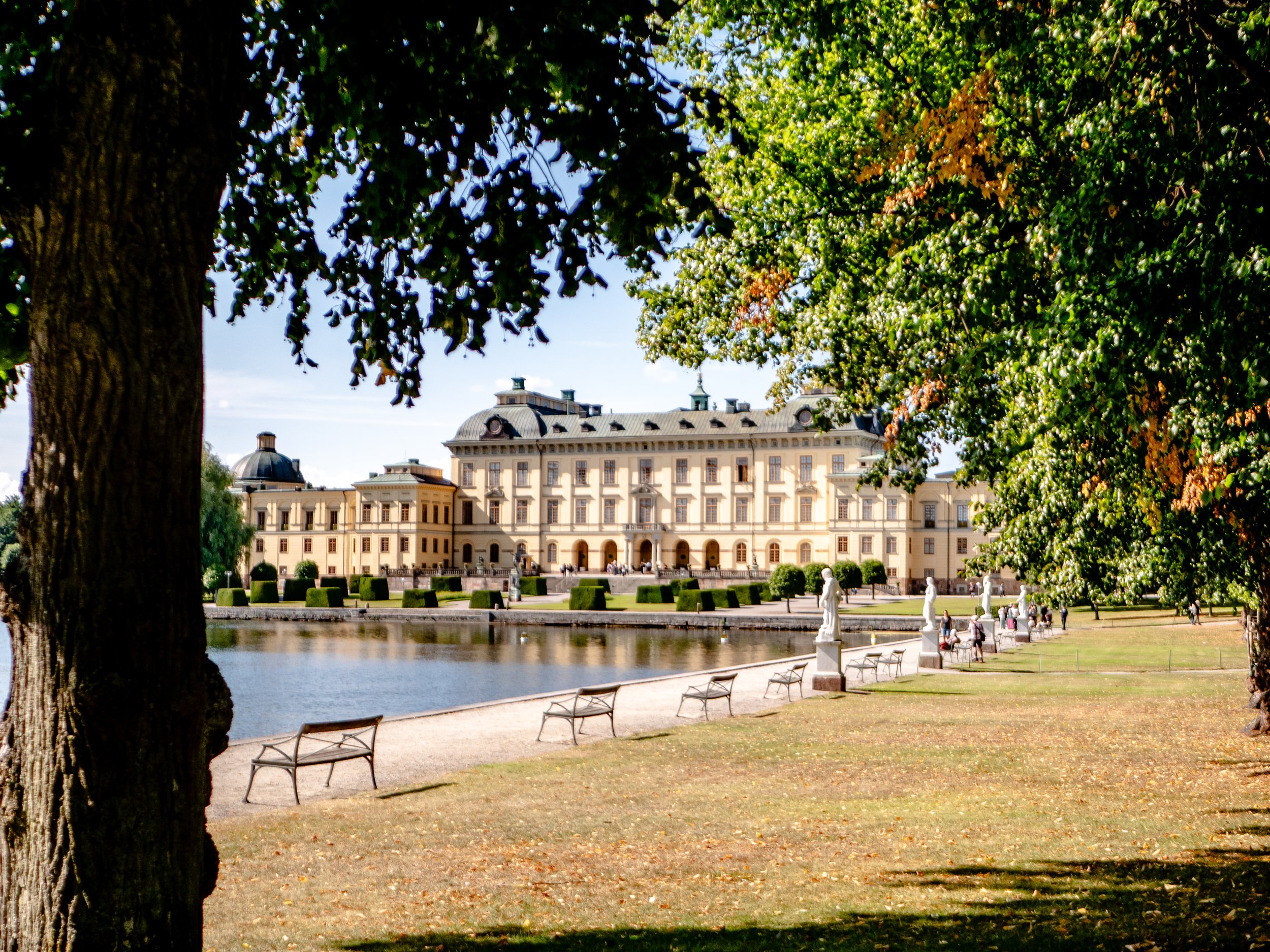
Most travelers rush straight to the Royal Palace in Gamla Stan. While central, it lacks the serene, lakeside romance of Drottningholm. Nestled on the peaceful island of Lovön in Lake Mälaren, Drottningholm isn’t just an old museum — it is the official private residence of King Carl XVI Gustaf and Queen Silvia. According to UNESCO, Drottningholm is "the finest example of an 18th-century northern European royal residence inspired by Versailles.
Every time I hop on the vintage wooden steamer at Klara Mälarstrand on a sunny Stockholm morning, I’m reminded of why Drottningholm ("Queen’s Islet") holds such a special place in my heart and in history of travelling around Stockholm.
Most travelers rush straight to the Royal Palace in Gamla Stan. While central, it lacks the serene, lakeside romance of Drottningholm. Nestled on the peaceful island of Lovön in Lake Mälaren, Drottningholm isn’t just an old museum — it is the official private residence of King Carl XVI Gustaf and Queen Silvia. According to UNESCO, Drottningholm is "the finest example of an 18th-century northern European royal residence inspired by Versailles.
Whether you’re planning a private luxury day excursion for your company or mapping out a self-guided visit, here is everything you need to know about experiencing Sweden’s premier UNESCO World Heritage Site.
If you want to know how we can help you to plan a perfect trip to Drottningholm, please look here.
“Drottningholm Palace (Drottningholms slott) is located on Lovön island, 15 km west of Stockholm. The ultimate summer trip is a 1-hour scenic ferry ride operated by Strömma from Klara Mälarstrand. For fast public transit, take the Green Line Metro to Brommaplan and catch Bus 176 or 177 (under 30 minutes).”
History & Construction: A Palace Shaped by Queens
Whenever guests ask me what sets Drottningholm apart from other European royal residences, my answer is simple: the vision of three extraordinary women. While many monarchies built grand palaces to display raw military might, Drottningholm was built, shaped, and preserved largely by Swedish queens.
“At a Glance: Built in the 17th century, Drottningholm was shaped by three powerful Swedish queens: Hedvig Eleonora, Lovisa Ulrika, and Silvia. It was designated Sweden’s first UNESCO World Heritage site in 1991.”


A Short Story of Drottningholm's Transformations
1580s: King Johan III builds original stone palace for Queen Katarina Jagellonica
1661: Fire destroys the original building
1662: Queen Dowager Hedvig Eleonora commissions Baroque rebuilding (Architects Tessin)
1744: Given as a birthday gift to Princess Lovisa Ulrika (Rococo transformation)
1981: Becomes the official permanent residence of the Swedish Royal Family
1991: Designated Sweden’s very first UNESCO World Heritage Site
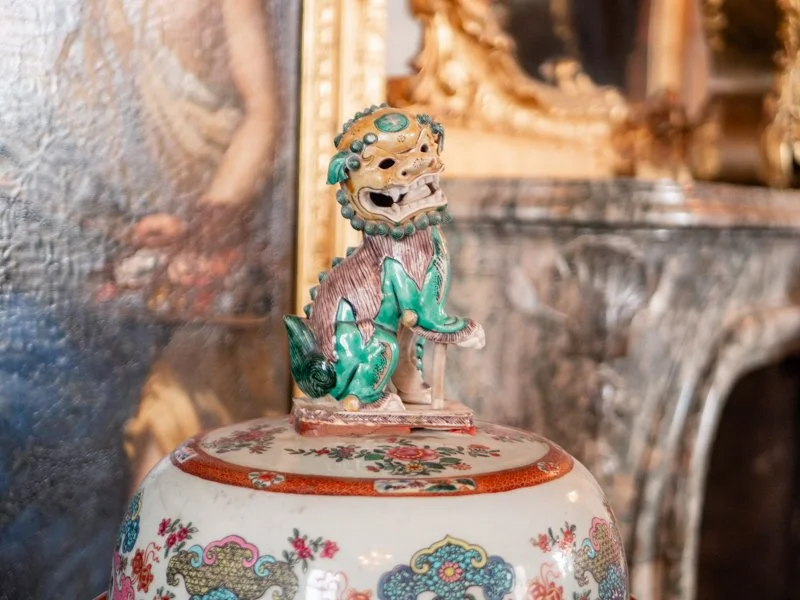
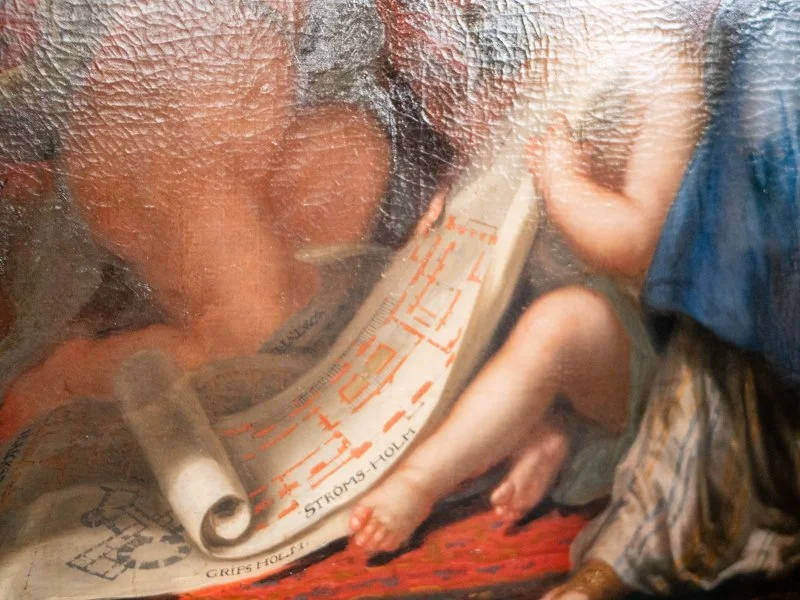
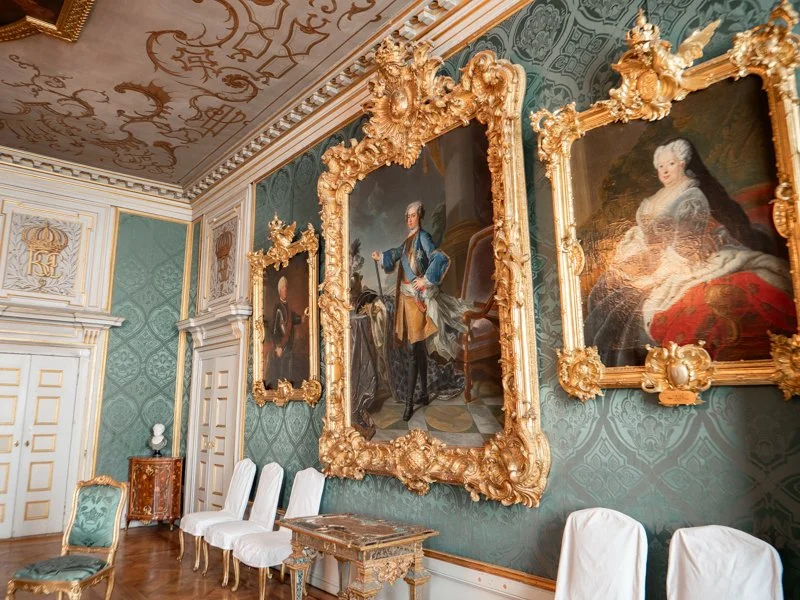
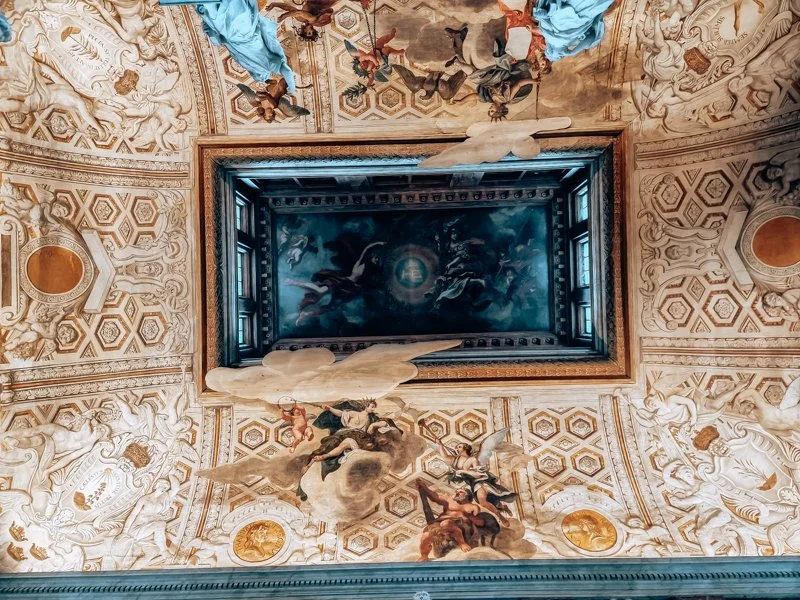
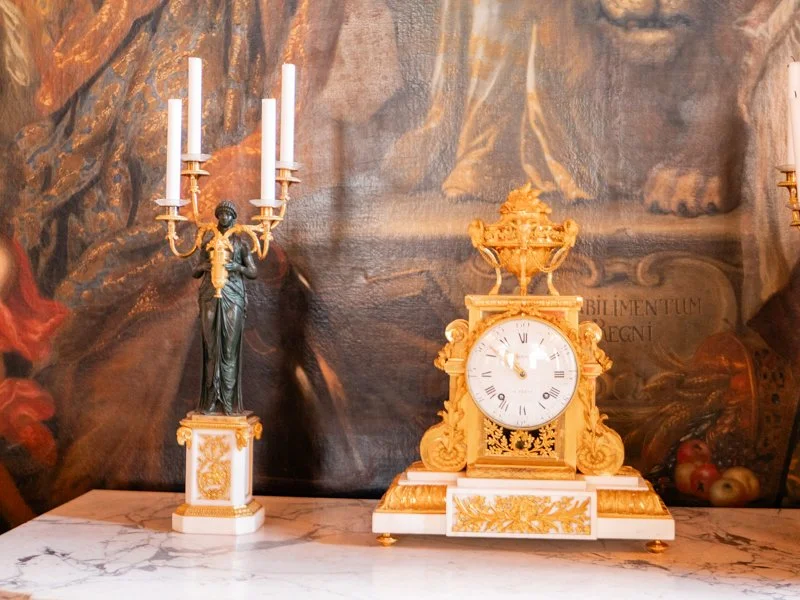
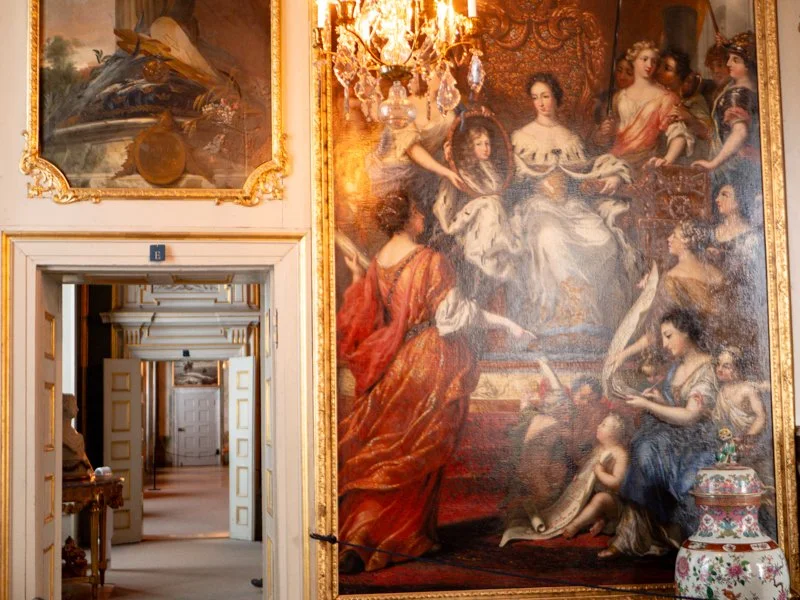
The Queens Who Made It Happen
Queen Hedvig Eleonora
After a fire destroyed the original 16th-century residence in 1661, the Dowager Queen hired Nicodemus Tessin the Elder (and later his son) to build an extravagant Baroque summer retreat. She had something to prove: Sweden was a European superpower, and its architecture needed to reflect that power.
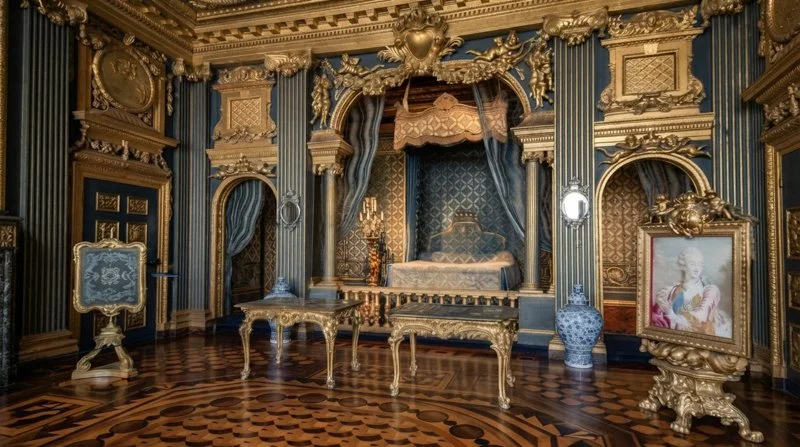
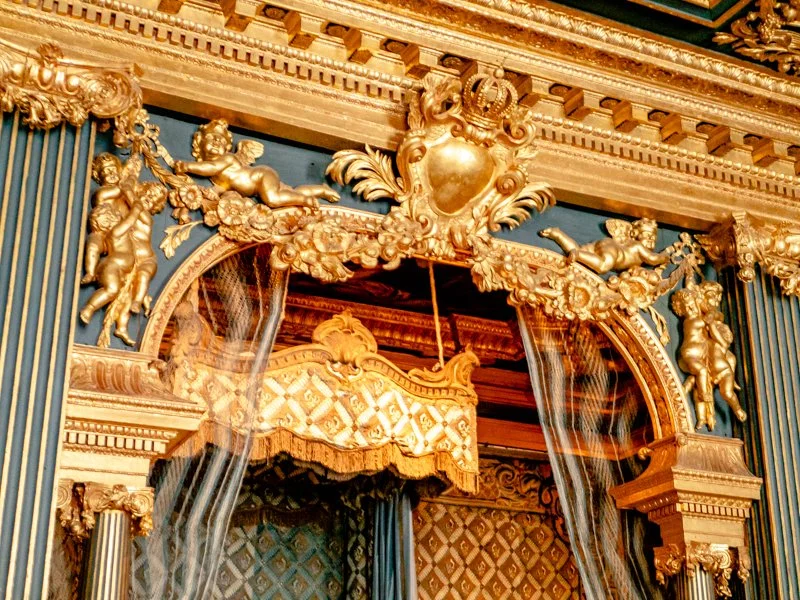
Hedvig Eleonora’s State Bedchamber
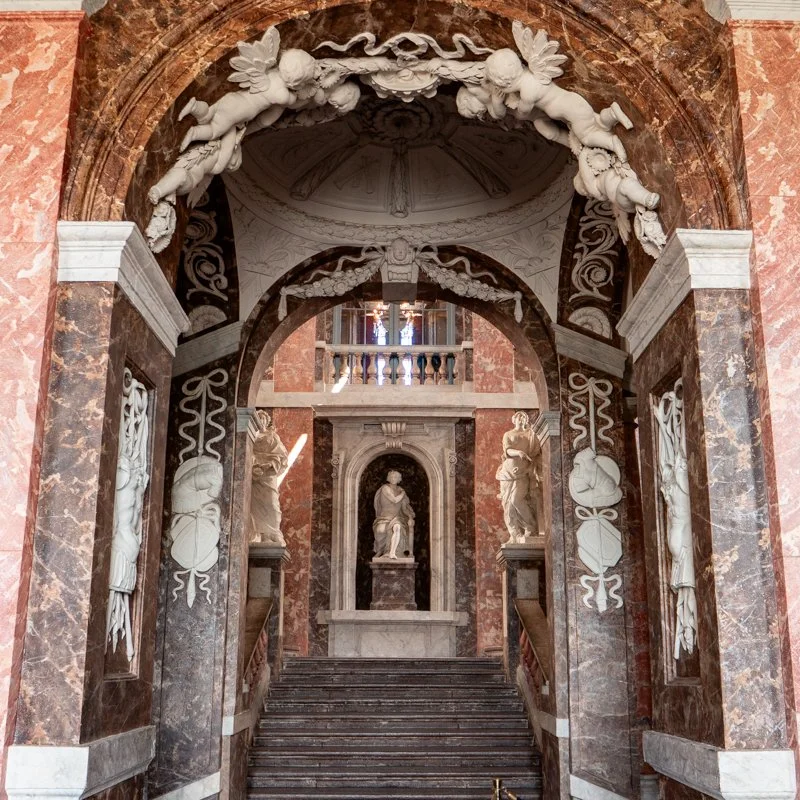
This is the dramatic center of the Baroque wing. Painted in rich gold leaf and deep royal blue, it served not as a private place to sleep, but as a public audience chamber where the Queen received dignitaries while sitting in state.
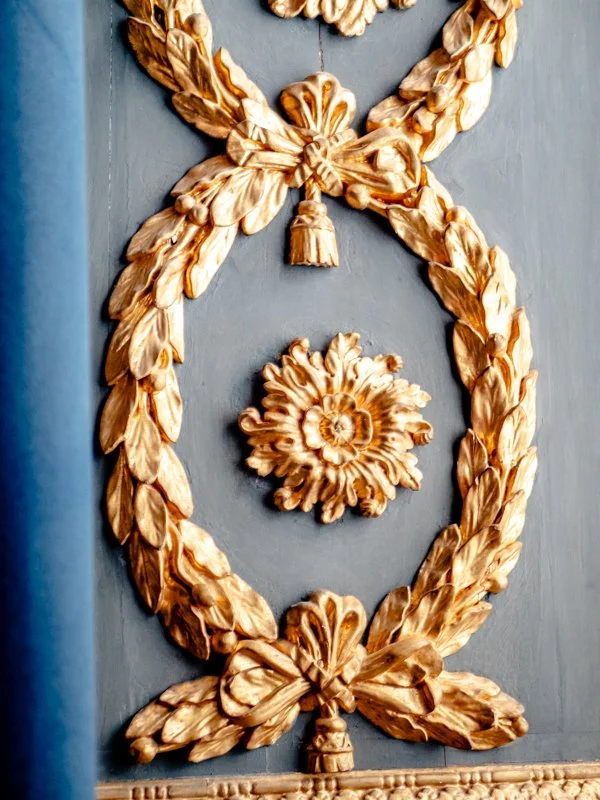
Queen Lovisa Ulrika
In 1744, the palace was given as a birthday gift to Princess Lovisa Ulrika of Prussia. A passionate patron of the Enlightenment, she brought French culture, philosophy, and Rococo elegance to the estate, founding the theater and creating the famous Chinese Pavilion.
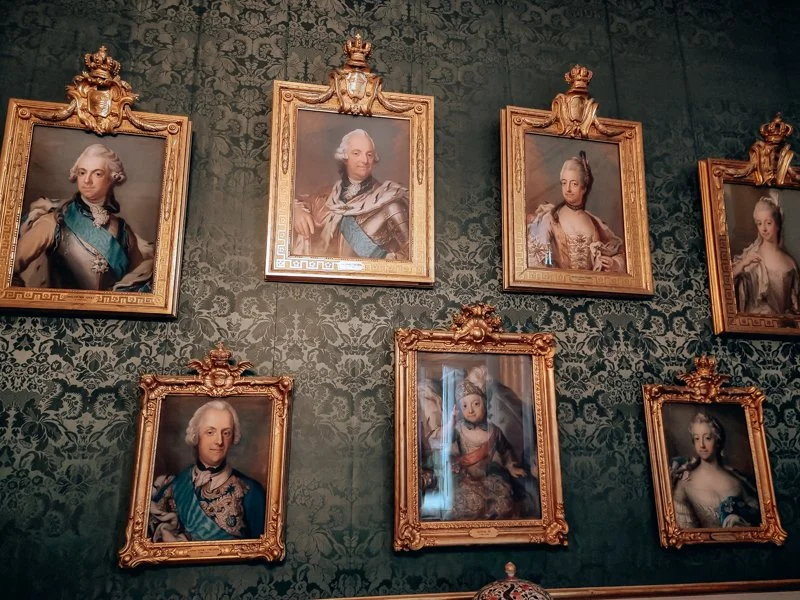
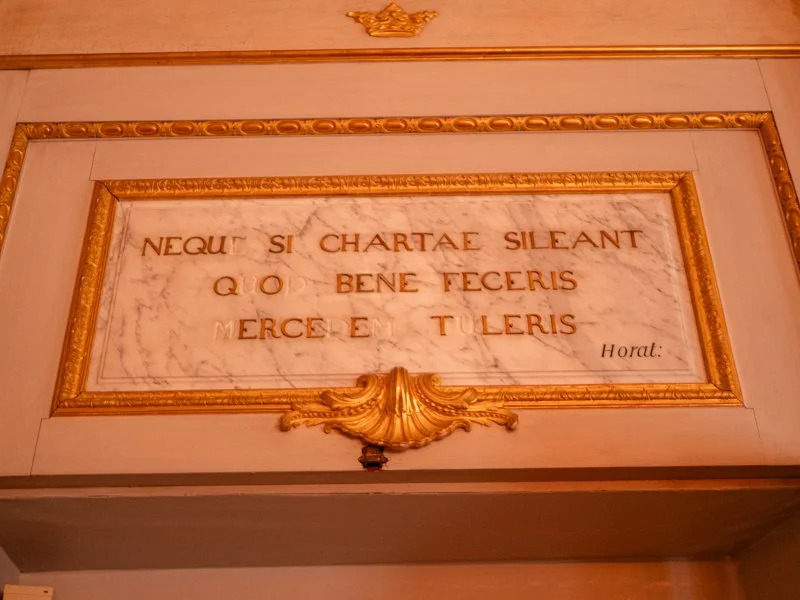
The Most Beautiful Room in Sweden: Queen Lovisa Ulrika’s Library
If you love books and classical design, prepare to be captivated. Lovisa Ulrika’s Library is widely celebrated as the single most beautiful interior in Sweden.
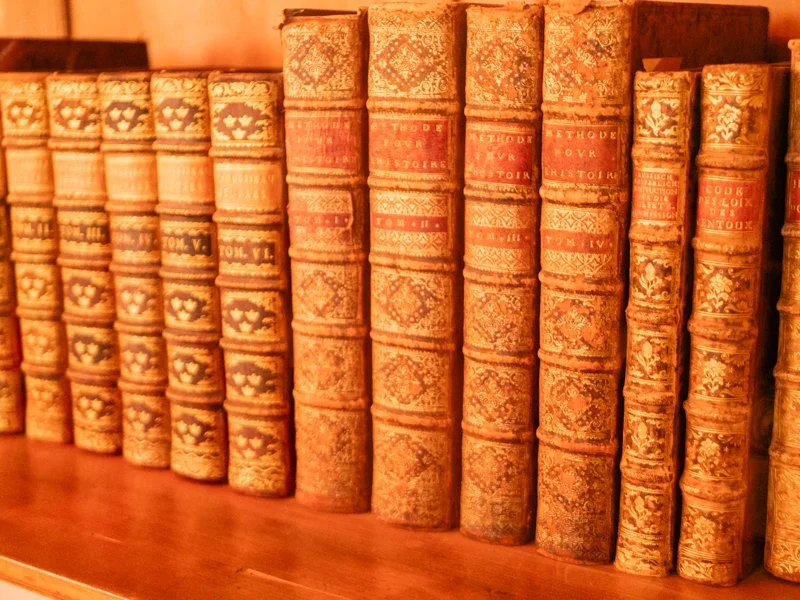
Designed by Jean Eric Rehn in the mid-1700s, this bright Rococo masterpiece features soft pastel-and-gold paneling, delicate wood carvings, and floor-to-ceiling shelves housing thousands of rare 18th-century volumes — including personal correspondence with Voltaire and rare works on botany, philosophy, and science.


Queen Silvia
In 1981, the current royal family chose to move their primary home from Stockholm's crowded inner-city palace to Drottningholm's southern wing, bringing real warmth and life back into the historic domain.
Stepping Inside: Lavish Baroque & "The Most Beautiful Room in Sweden"
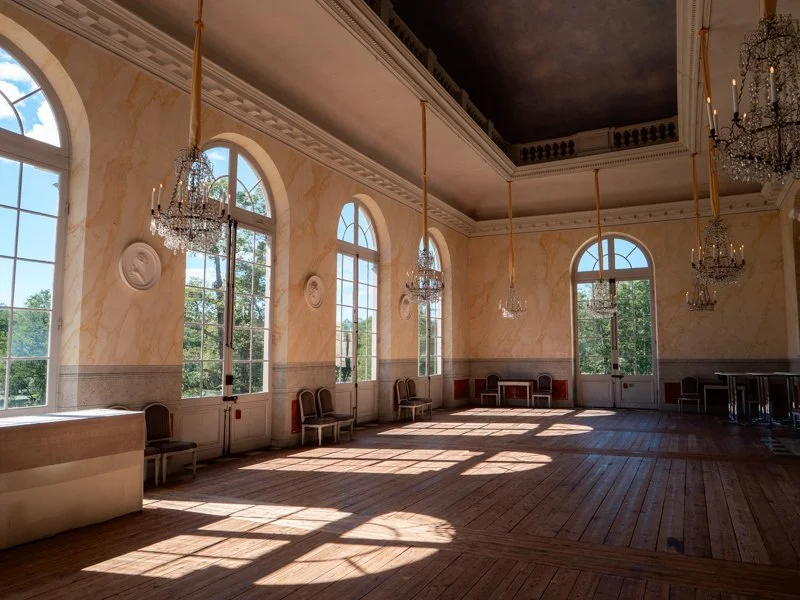
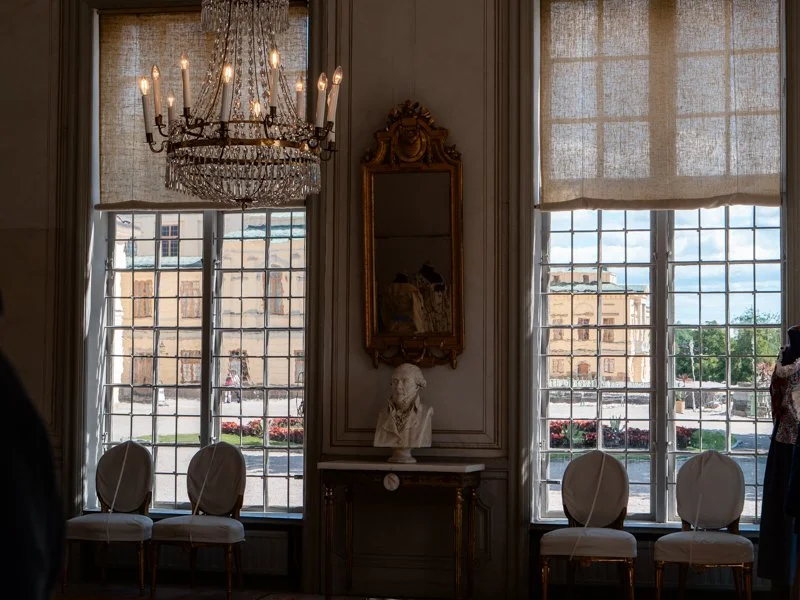
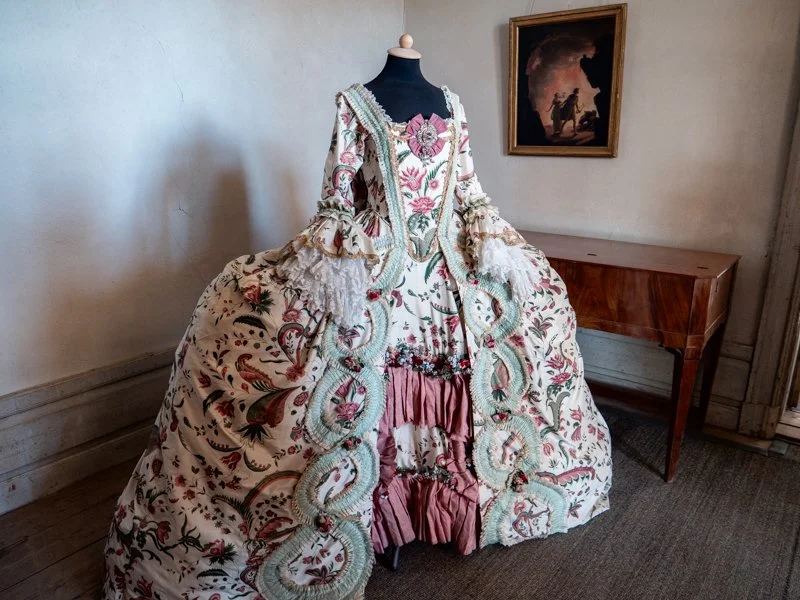
Walking through the palace gates feels like stepping into 18th-century Europe. The state rooms are an extraordinary journey through time, shifting seamlessly from high Baroque grandeur to light-filled Rococo.


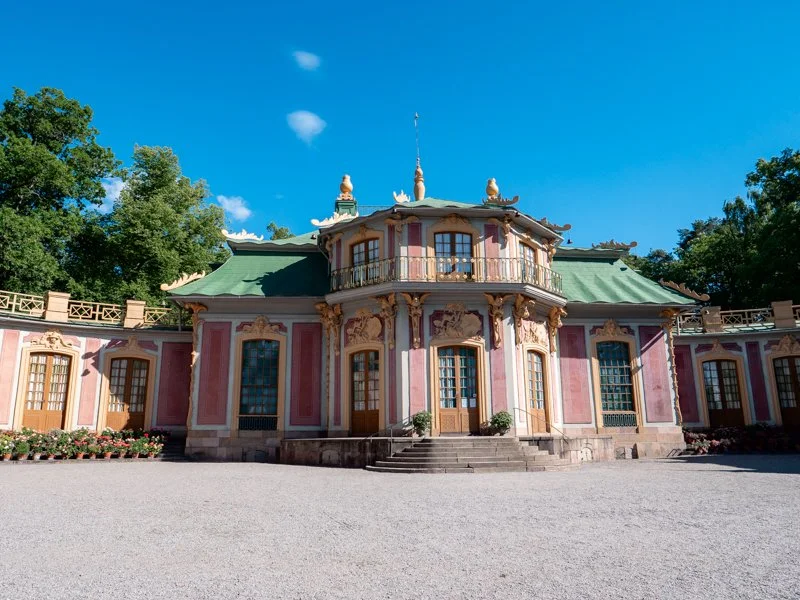
Kina Slott: The Chinese Pavilion
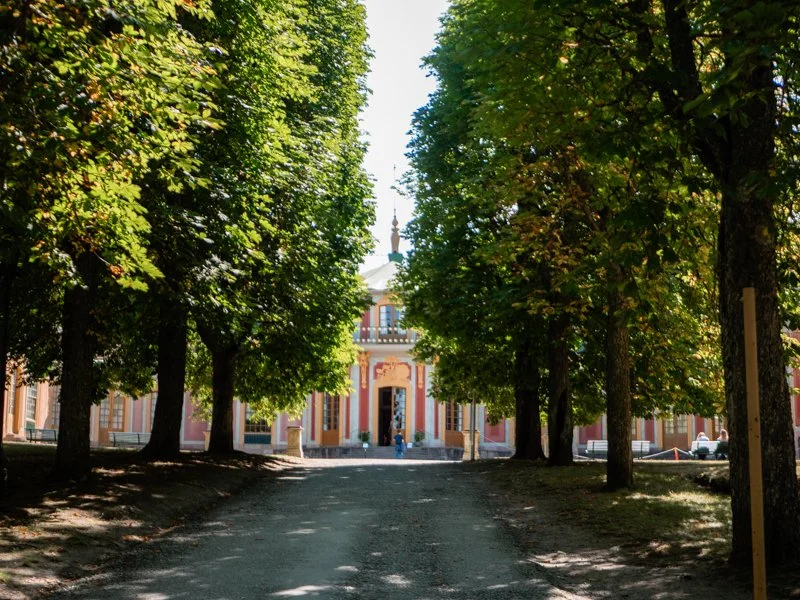
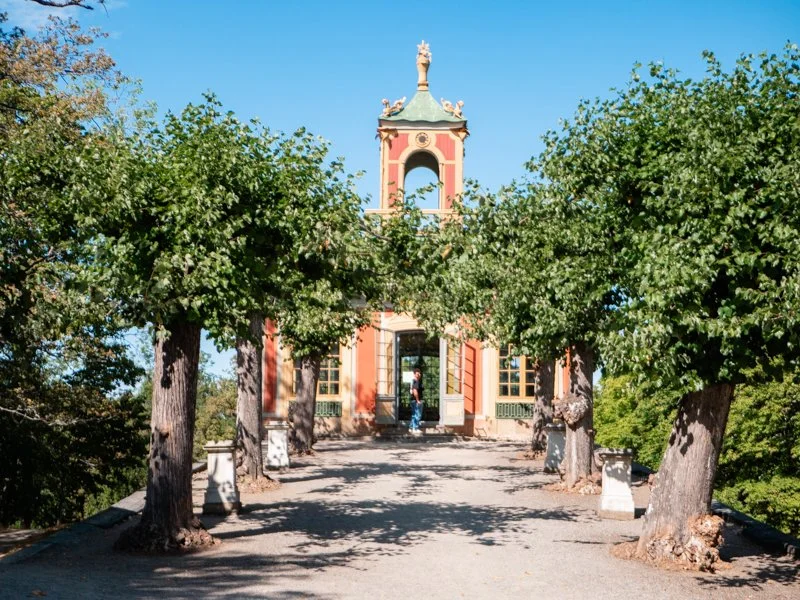
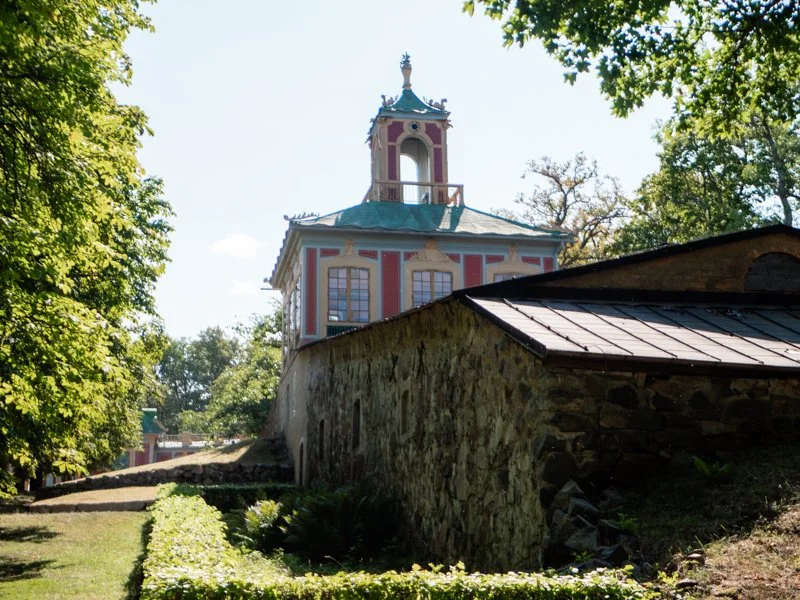
Tucked away in a quiet corner of the park, about a 20-minute walk from the main palace, sits Kina Slott (The Chinese Pavilion).
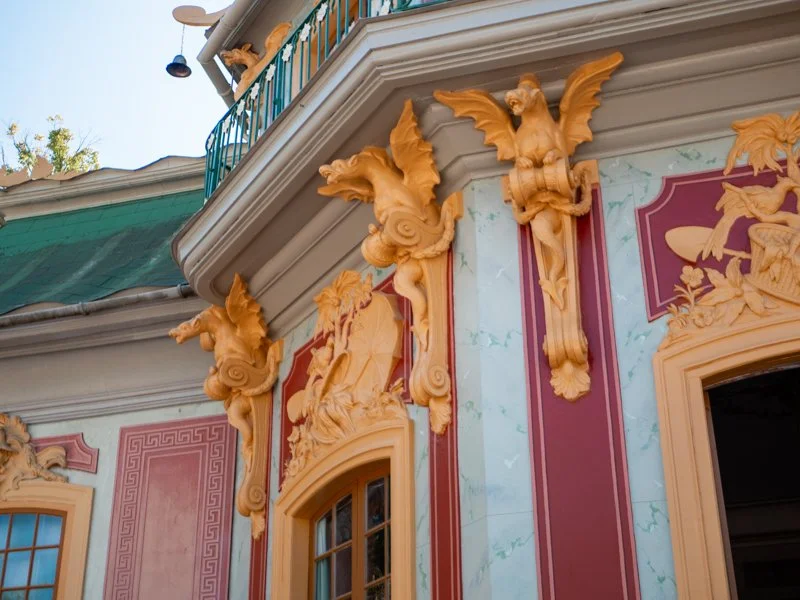
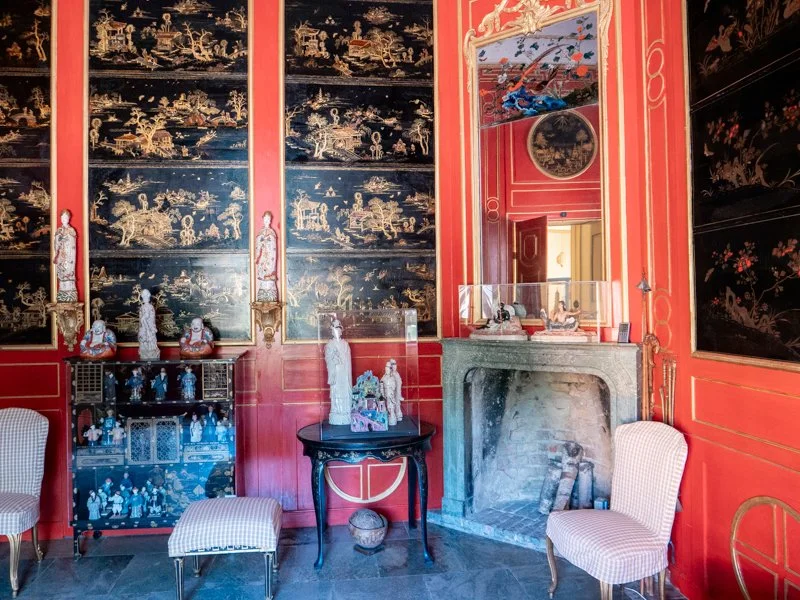
In 1753, King Adolf Fredrik surprised Queen Lovisa Ulrika on her 33rd birthday with a fairytale-like wooden pavilion built in secret and delivered in pieces. Europe was captivated by Chinoiserie — an oriental fantasy of Chinese art, silk, lacquers, and porcelain.
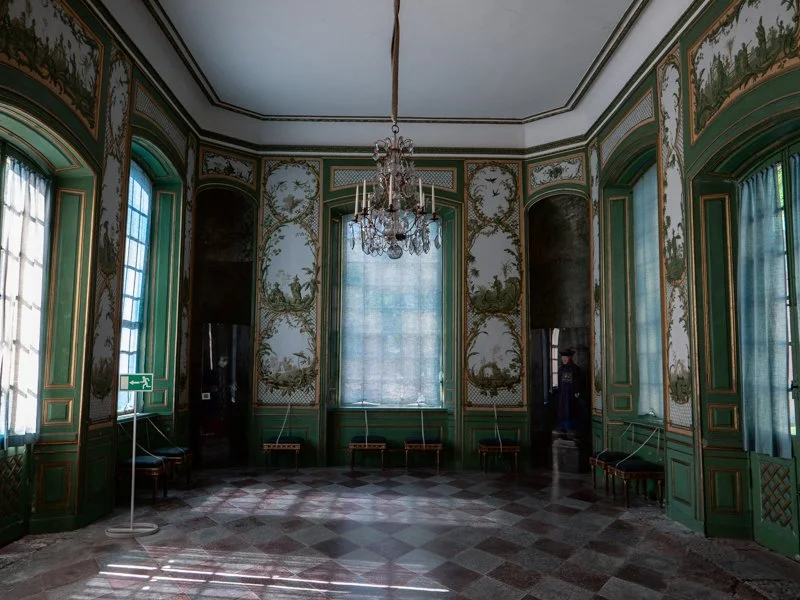
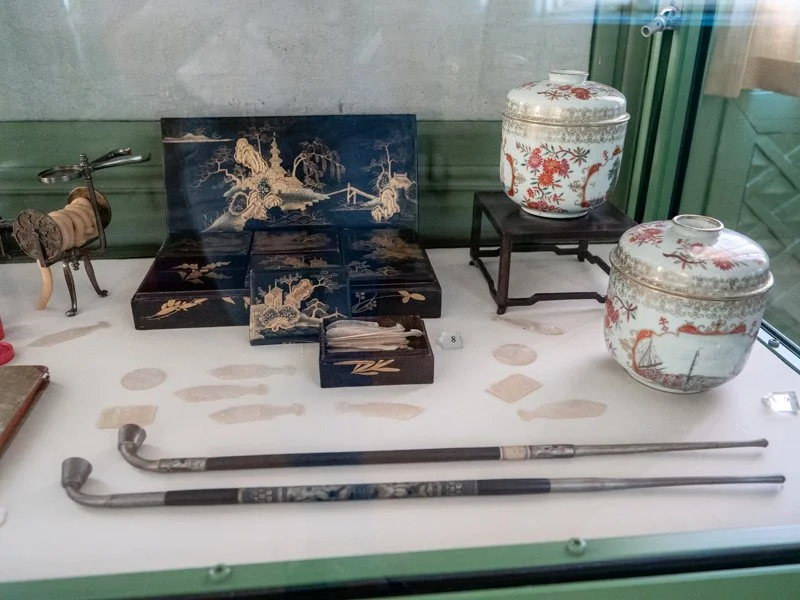
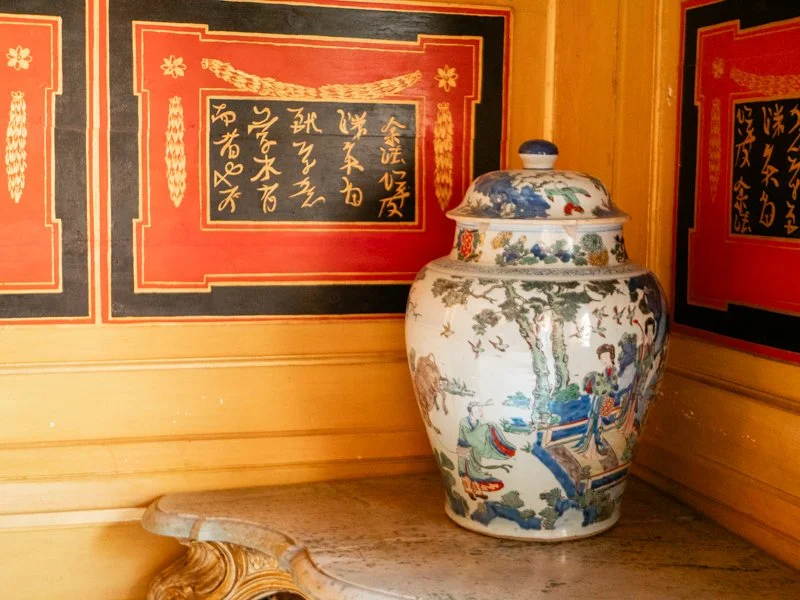
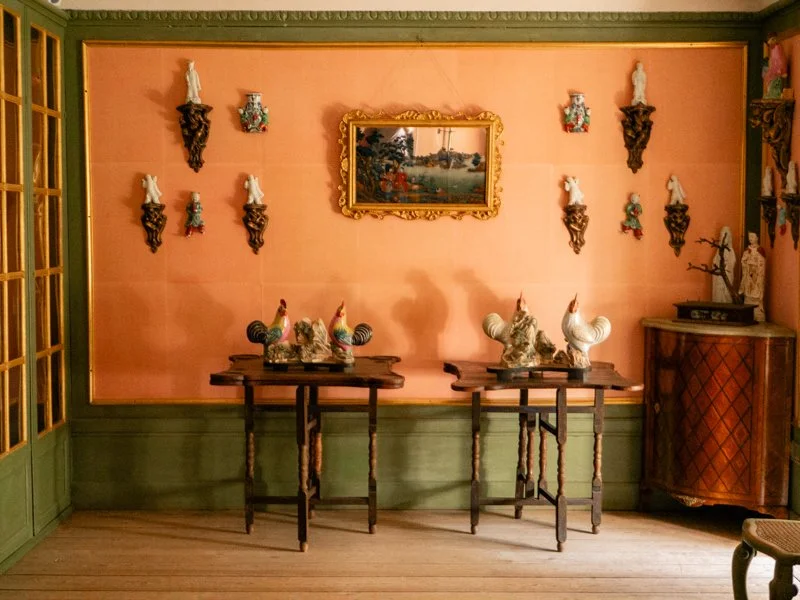

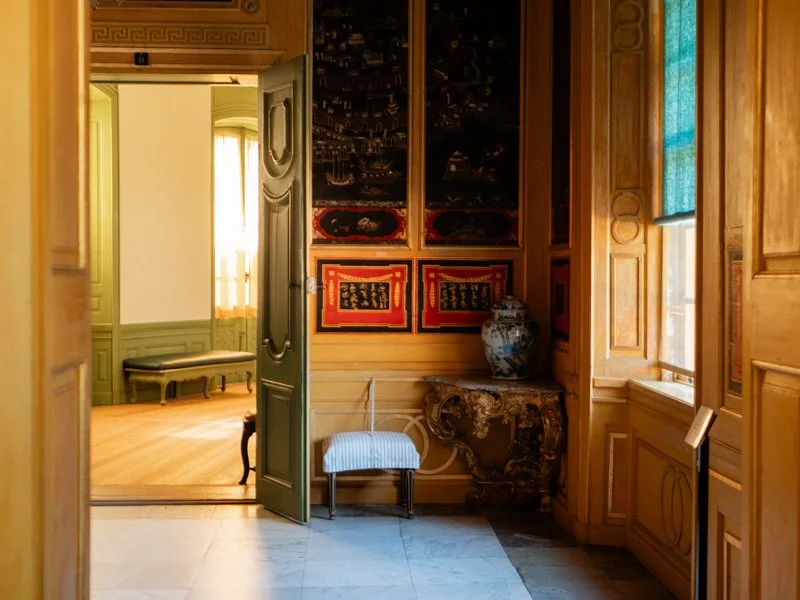
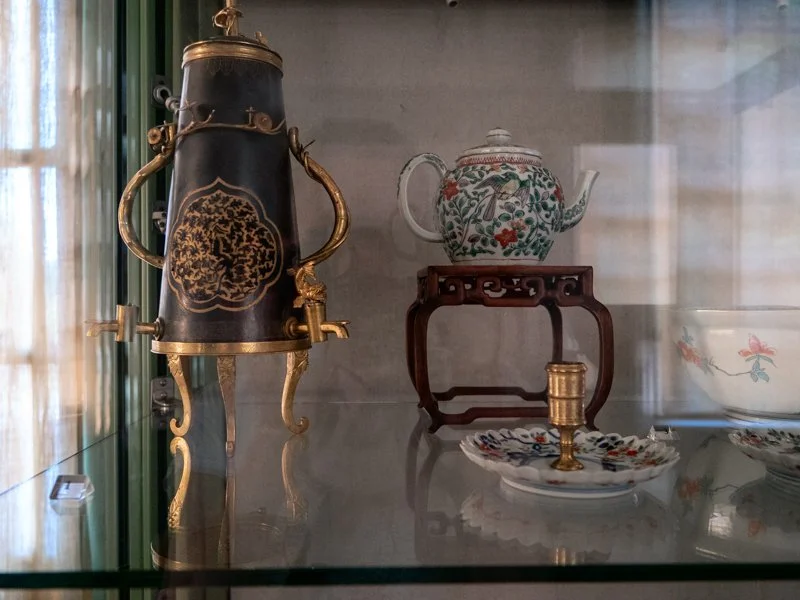
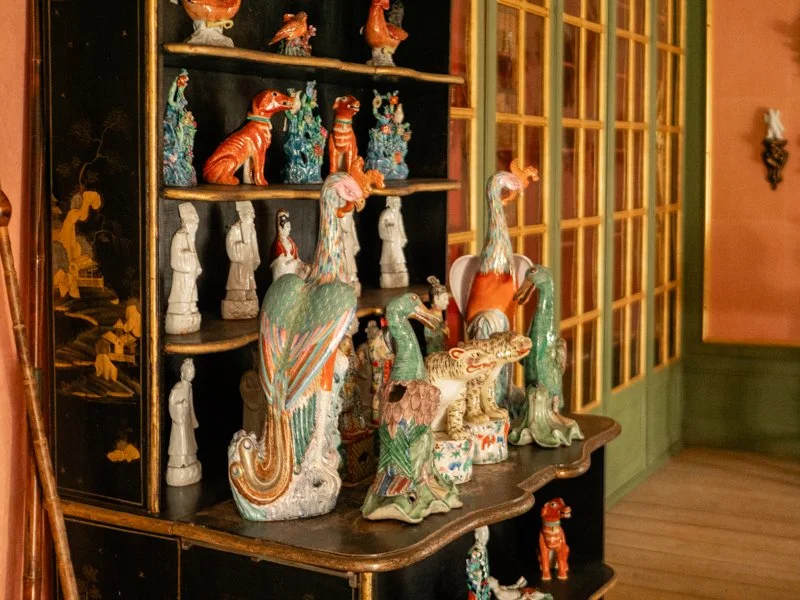


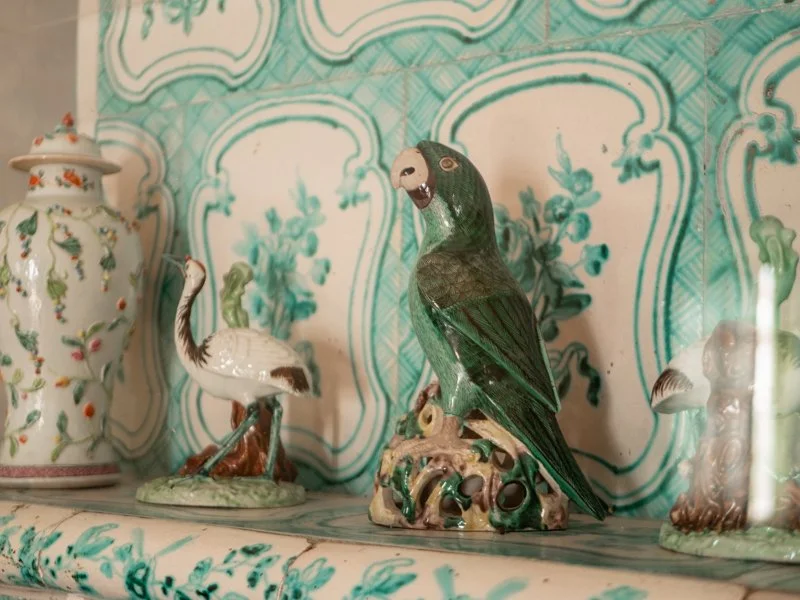
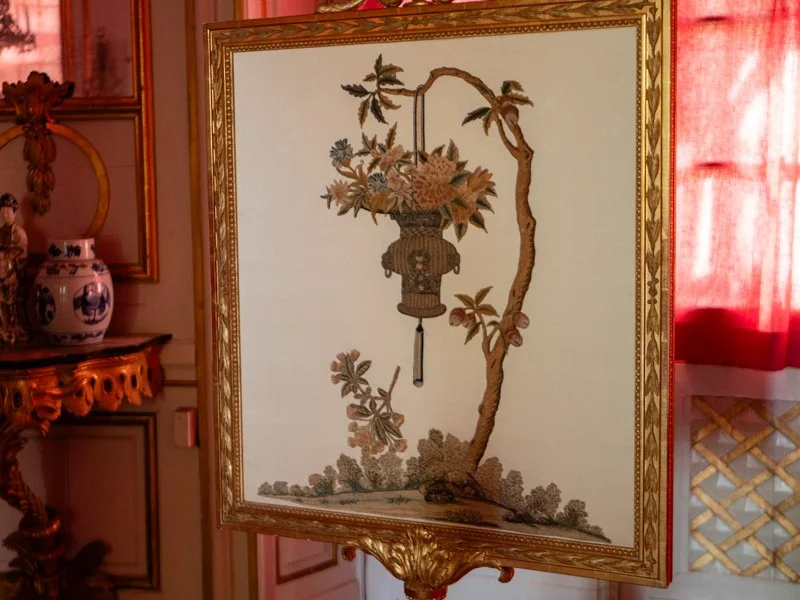
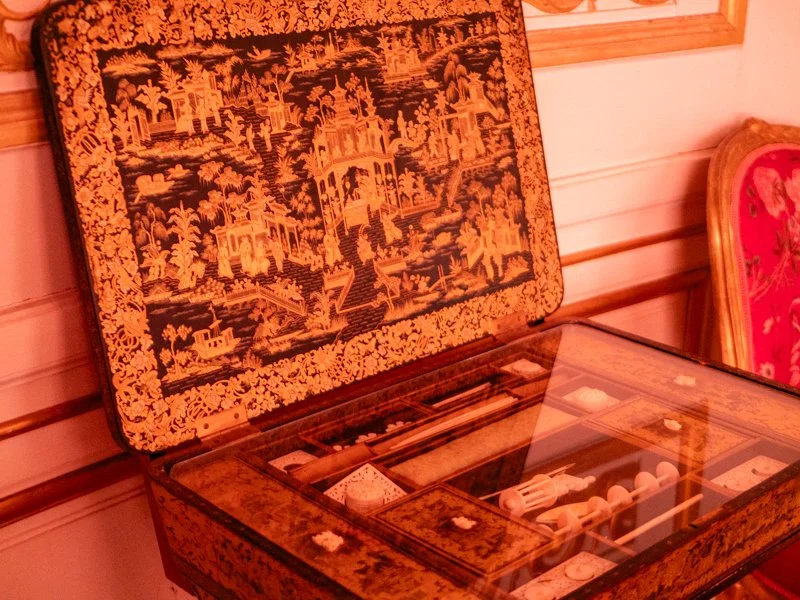
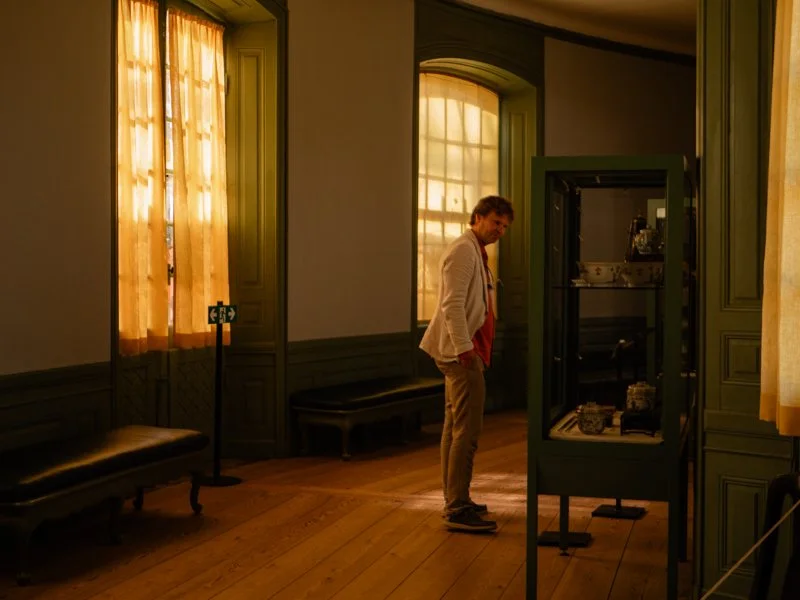
The Confidence Room (Confidencen): My personal favorite detail inside the pavilion complex. To avoid being overheard by servants during private conversations, the dining table was mounted on a hydraulic hoist in the basement. It was fully set downstairs and lifted through the floorboards so guests could dine en confidence.
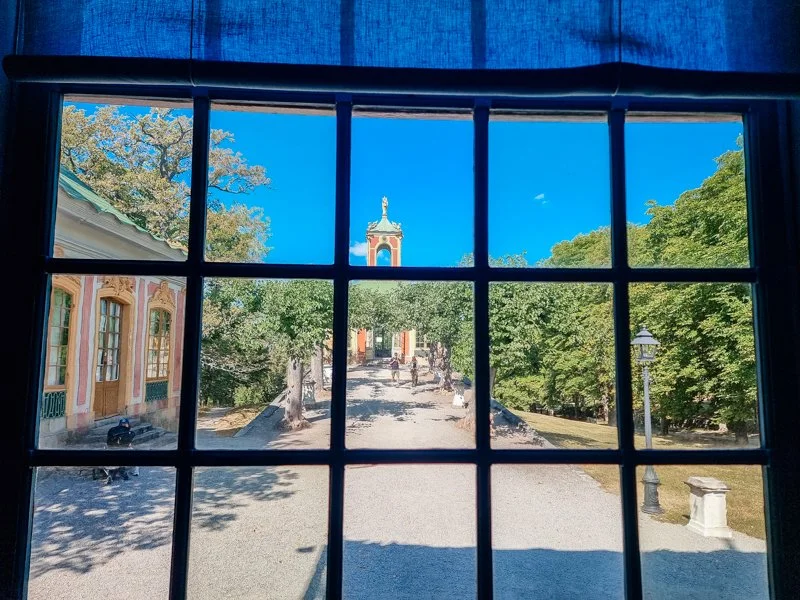
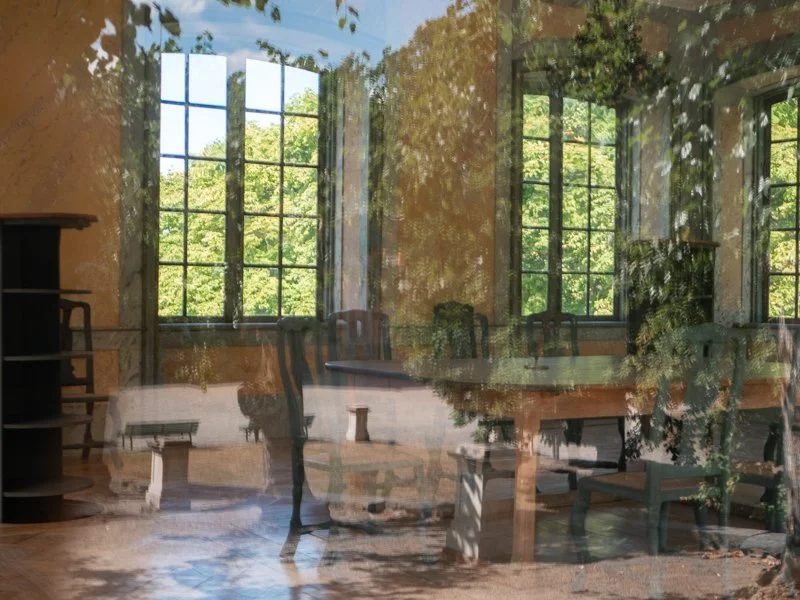
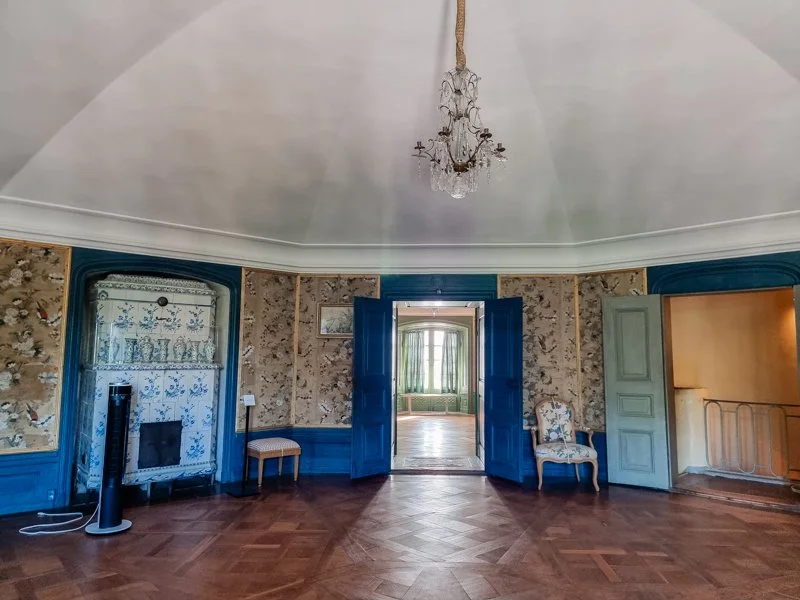
The Whispering Room: A circular room with unique acoustic qualities: standing on one side and whispering against the wall allows someone directly opposite to hear every word clearly.
The King’s Secret Retreat: Whenever King Adolf Fredrik needed a escape from palace politics and court life, he locked himself away in his personal woodworking shop near the Chinese Pavilion. Remarkably, his original 18th-century tools are still on display inside today!


Coffee Break on Royal Grounds
If you are traveling with Sweden Tours DMC, we have likely introduced you to the beloved Swedish tradition of fika – a relaxing coffee break accompanied by fresh pastries.
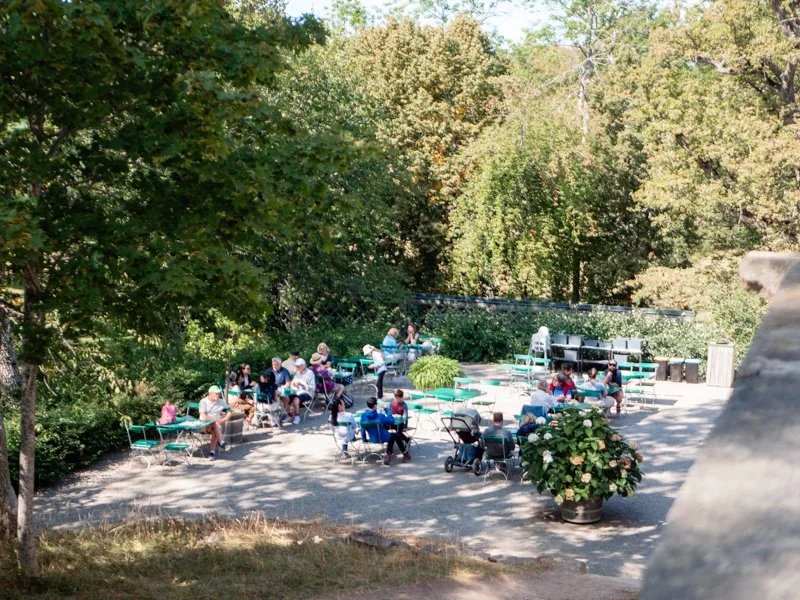
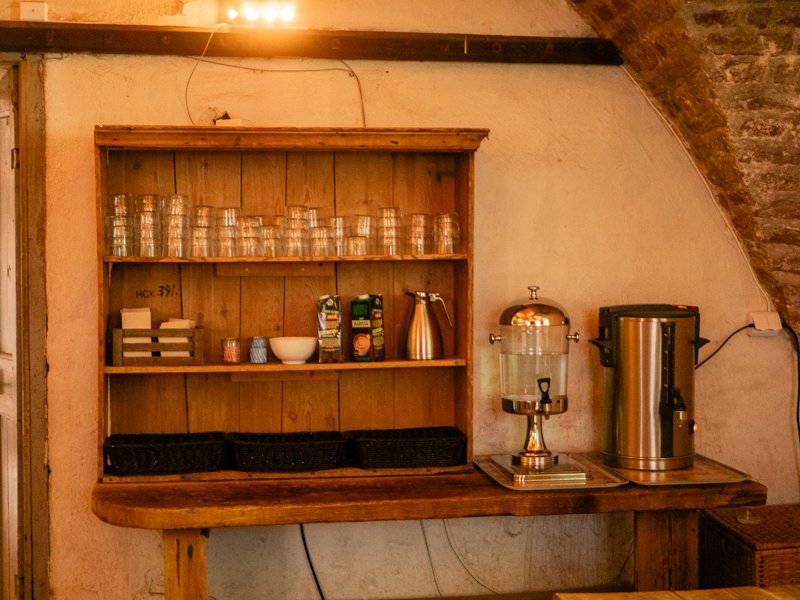
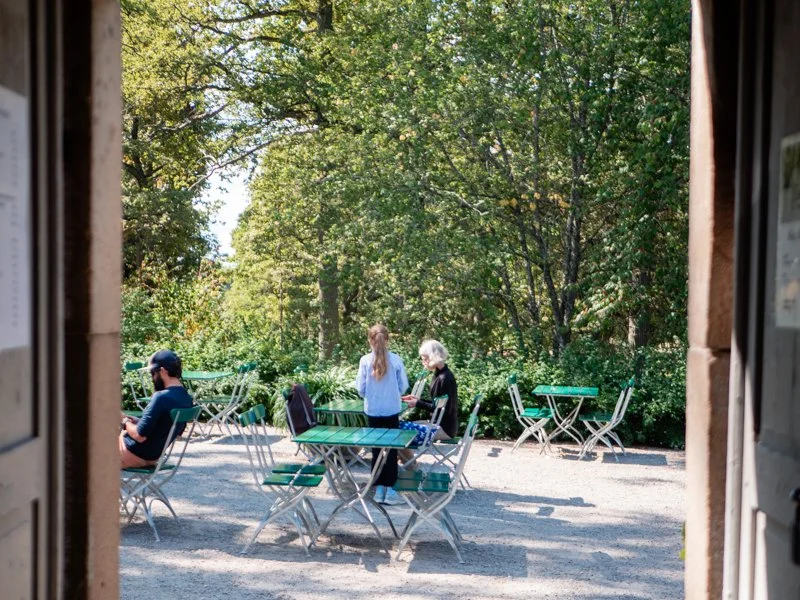
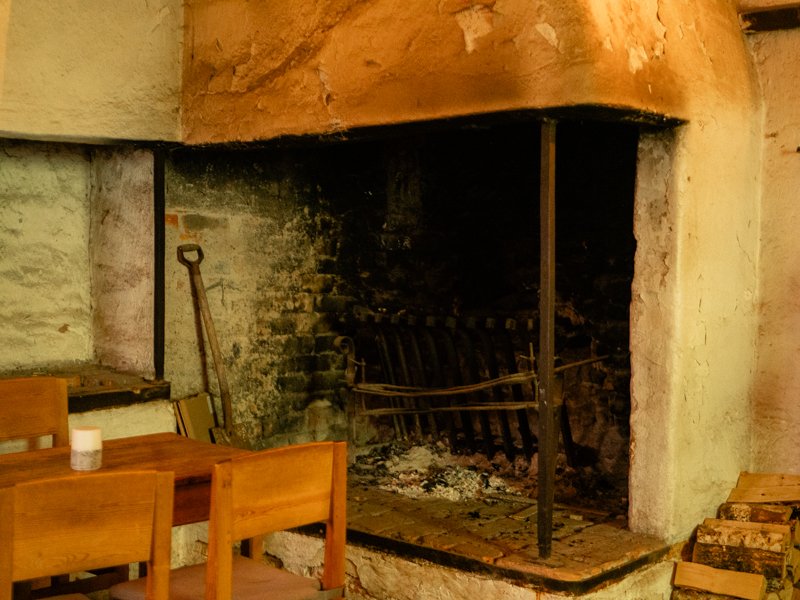
After strolling out to the Chinese Pavilion, you will definitely be ready to unwind with something sweet. During the summer, a charming café opens right next to the pavilion set within historic surroundings. It was in this very building that royal meals were originally prepared before being served in Confidencen.

The Parks & Gardens: Baroque Precision Meets English Nature
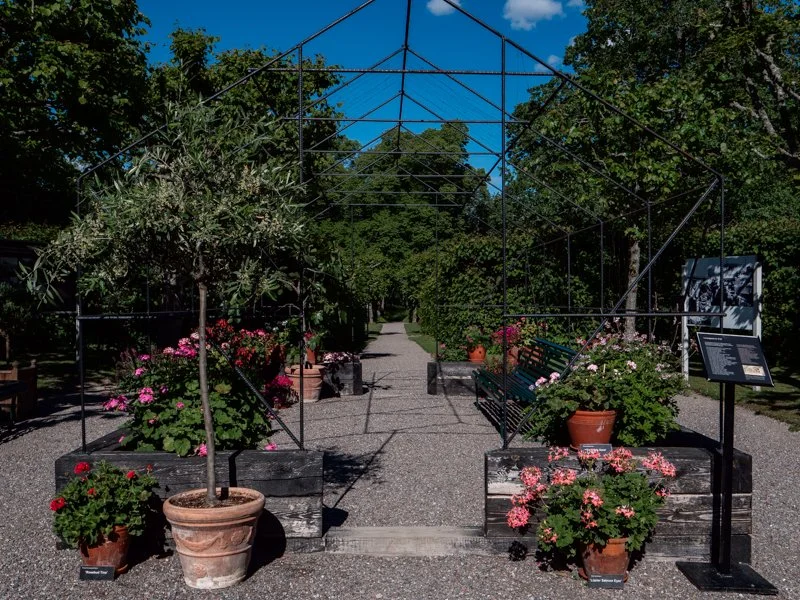
The park spans 80+ hectares and features 30+ original 18th-century hand-painted stage backdrops in the theater. The gardens around Drottningholm are open year-round and free to enter, making them a favorite weekend retreat for local Stockholmers. The estate features distinct landscaping eras
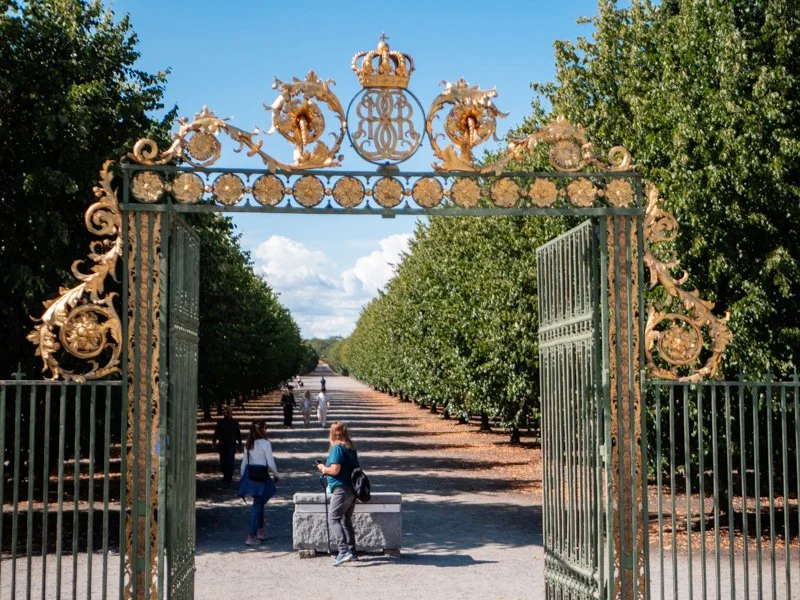
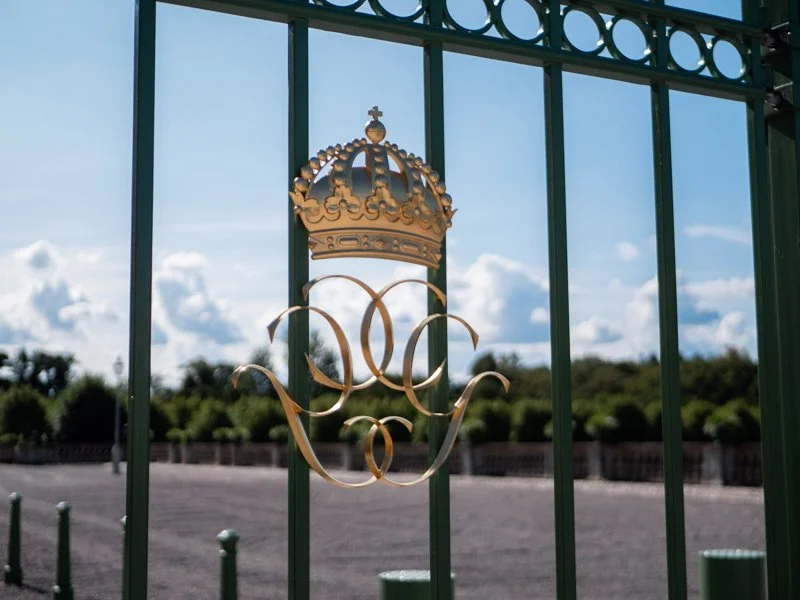
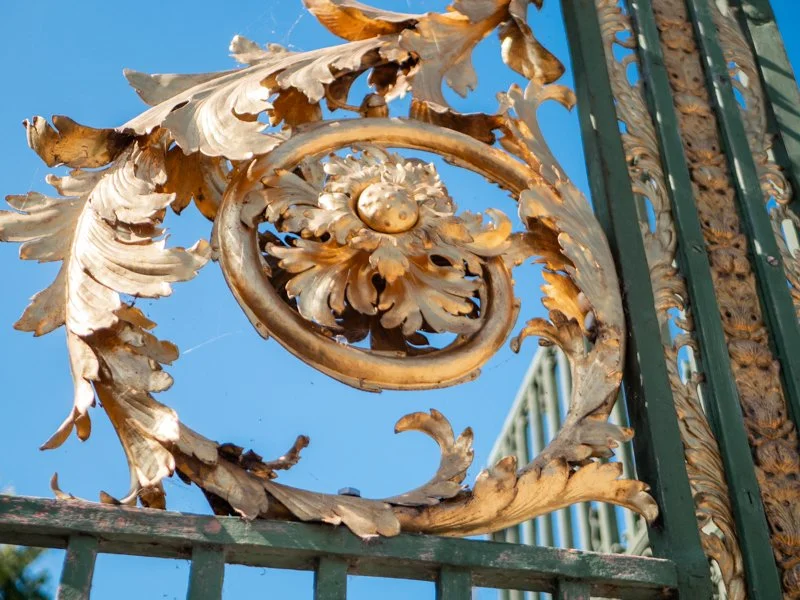
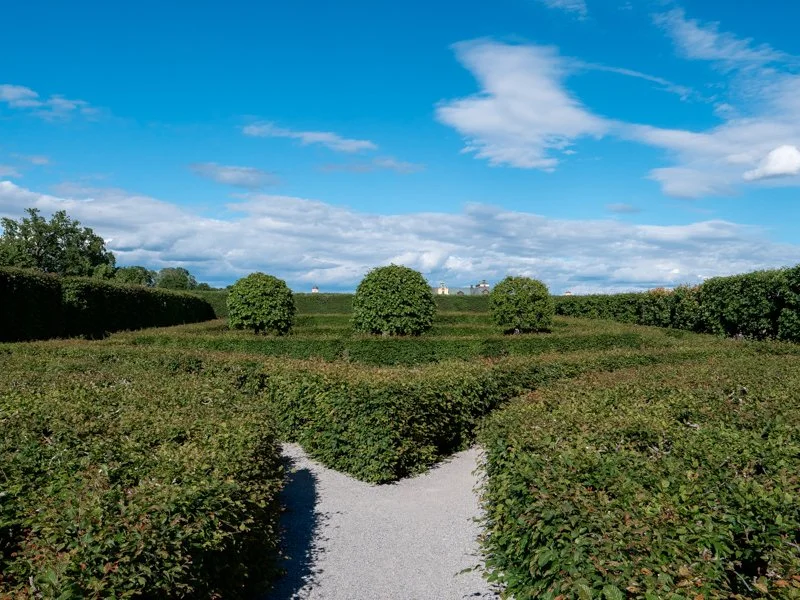
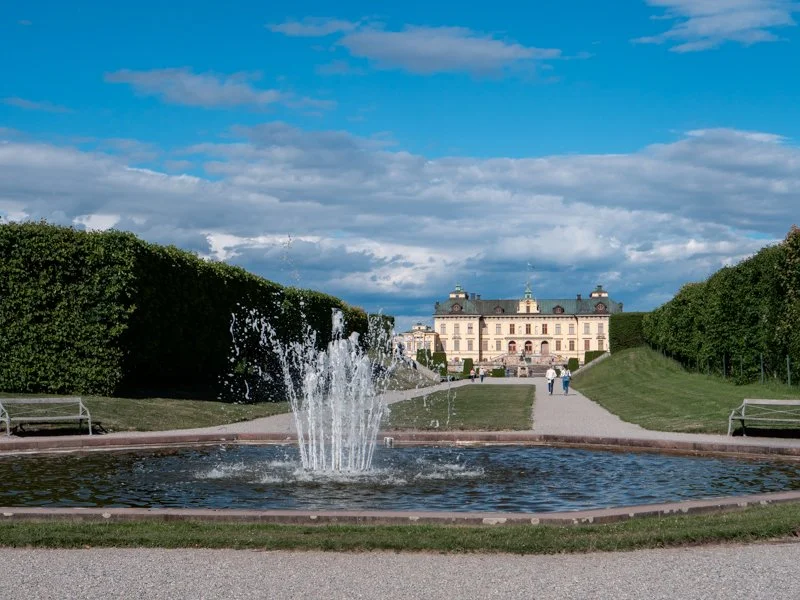
The Baroque Garden
Formal avenues bordered by four rows of lime trees, box-wood hedges, and classical bronze sculptures by Adriaen de Vries laid out in the 1680s in French / Versailles style.
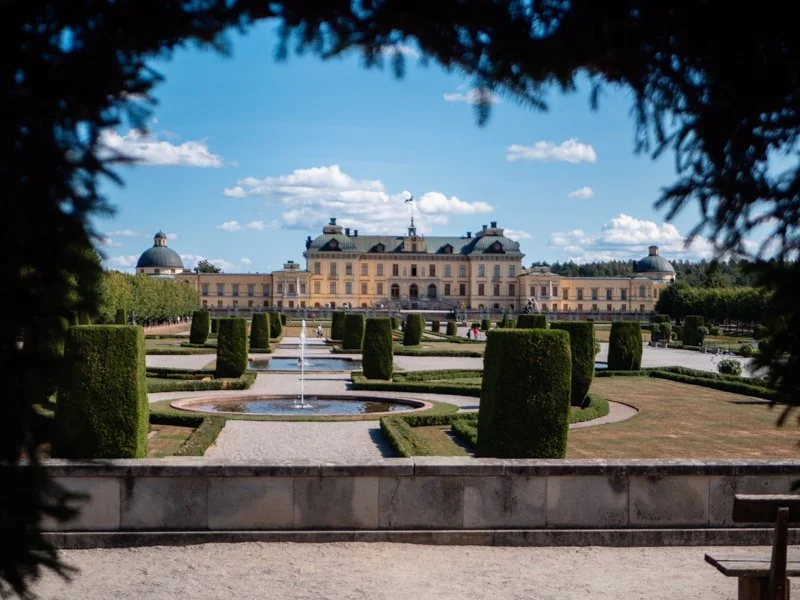


The English Park
Created by Gustav III in the 1780s. Winding paths, tree-lined canals, expansive lawns, and idyllic vistas designed for long walks.
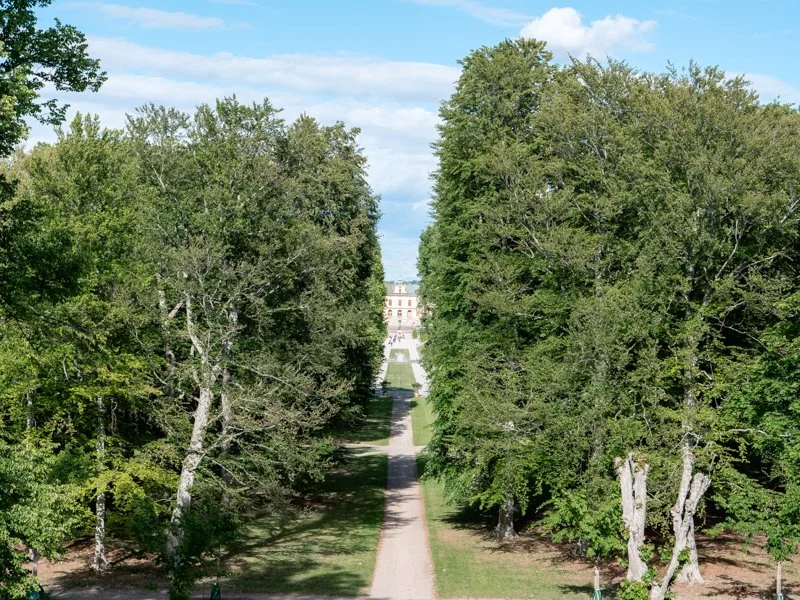
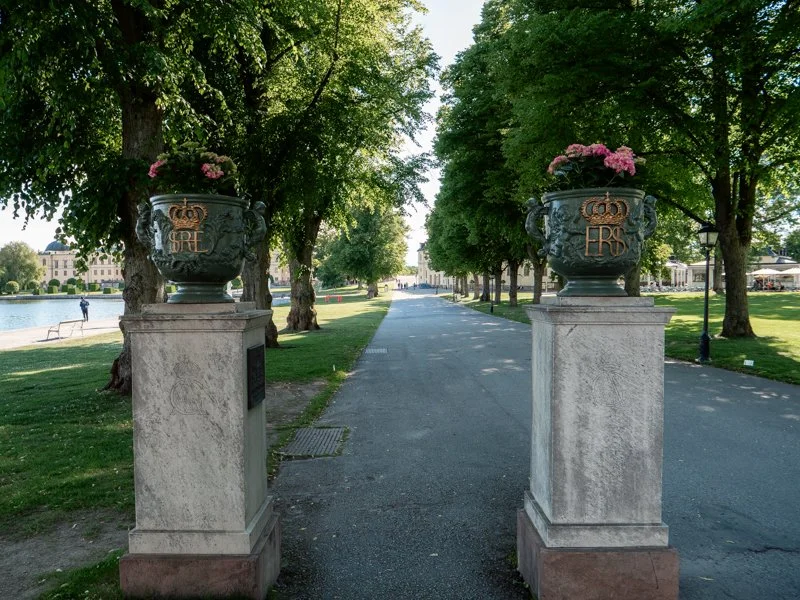
“Gardens Summary: Spanning over 80 hectares, the estate features three distinct landscaping styles: the French Baroque Garden, the Rococo Pavilion Gardens, and the English Landscape Park. Admission to the park grounds is free year-round.”
Drottningholm Slottsteater: The Oldest Working Theater in the World
“Theater Historic Record:
Year Built: 1766 for Queen Lovisa Ulrika.
Historic Status: Oldest preserved theater in the world operating with its original 18th-century hand-operated wooden stage machinery.
Key Feature: 30+ original hand-painted stage sets intact using authentic trompe-l’œil depth techniques.”
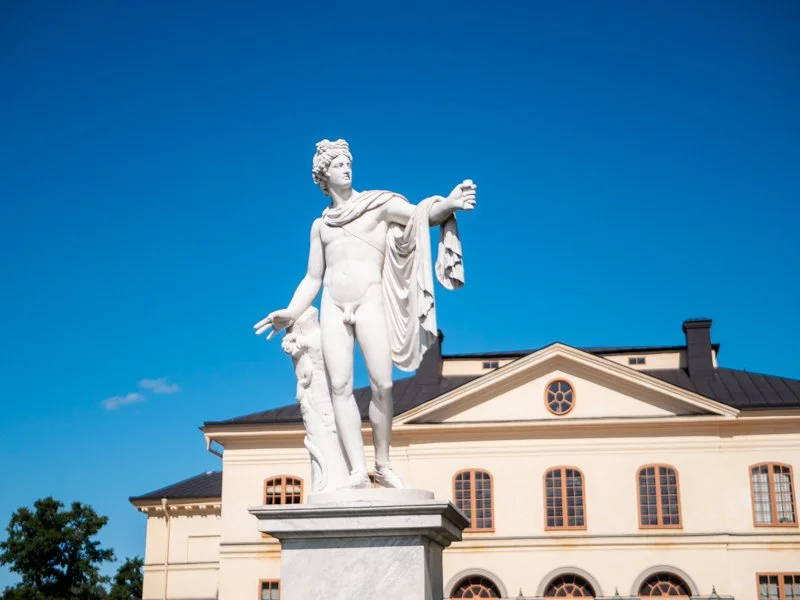
Built in 1766 for Queen Lovisa Ulrika, the Drottningholm Court Theater (Slottsteater) is an absolute miracle of architectural preservation.
After King Gustav III was assassinated in 1792, the theater was boarded up and forgotten for over a century. When historians rediscovered it in the 1920s, they found a complete, untouched 18th-century opera house — including 30+ original wooden stage machinery sets, hand-operated wooden waves for sea scenes, and papier-mâché backdrops using clever trompe l'oeil depth tricks.
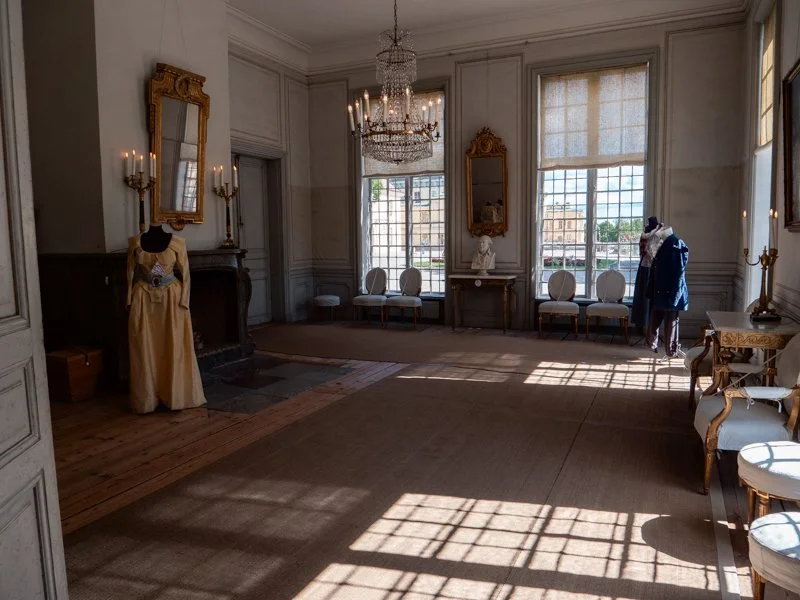
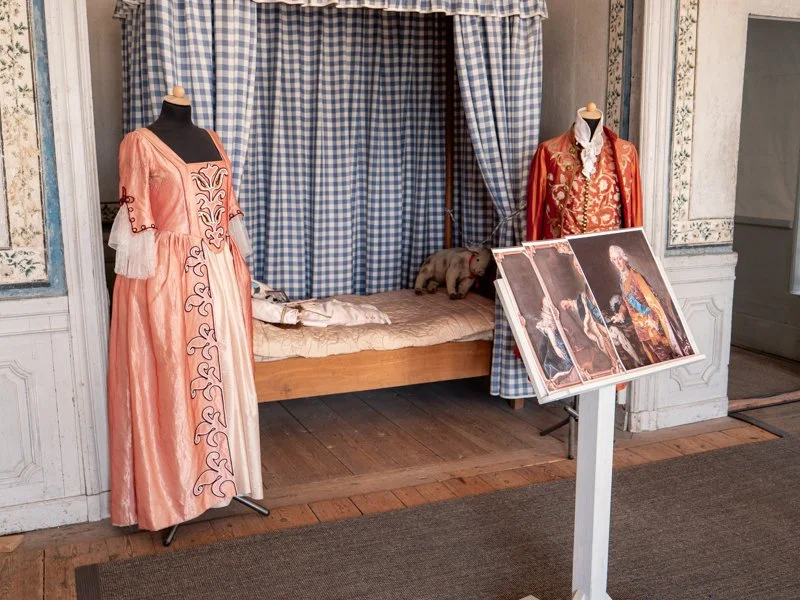


Today, it remains the oldest theater in the world still using its original 18th-century stage mechanics for summer opera performances.
Why Drottningholm is a UNESCO World Heritage Site
“Official UNESCO Statement (Inscribed 1991):
”The Royal Domain of Drottningholm stands on an island in Lake Mälaren near Stockholm. With its palace, perfectly preserved theatre (built in 1766), Chinese pavilion and gardens, it is the finest example of an 18th-century northern European royal residence inspired by the Palace of Versailles.””
In 1991, Drottningholm became Sweden's very first UNESCO World Heritage Site.
According to UNESCO, Drottningholm was inscribed because it represents "the finest example of an 18th-century northern European royal residence inspired by the Palace of Versailles." Unlike sites that preserve a single monument, UNESCO designated the entire Royal Domain: the main palace, the intact court theater, the Chinese Pavilion, and the surrounding historic gardens form a flawlessly preserved ensemble.
Practical Information for Planning Your Visit
Visiting Highlights:
Distance: 15 km west of central Stockholm.
Best Transport: Strömma Ferry from Klara Mälarstrand (1 hour) or Bus 176/177 from Brommaplan (1 hour).
Official 2026 Ticket Pricing & Opening Details:
Drottningholm Palace Entry: 170 SEK Adult / 150 SEK Student / 85 SEK Youth (Ages 7–17) / Free for Children 0–6.
Chinese Pavilion Entry: 140 SEK Adult / 120 SEK Student / 70 SEK Youth.
Combined Palace + Pavilion Ticket: 250 SEK Adult / 230 SEK Student / 125 SEK Youth.
Park & Gardens Access: Free admission 24/7 year-round.
Accepted Payments: Credit card or local cash (SEK only; foreign currencies not accepted).
Getting to Drottningholm Palace
Located 15 km west of downtown Stockholm, there are two primary ways to travel:
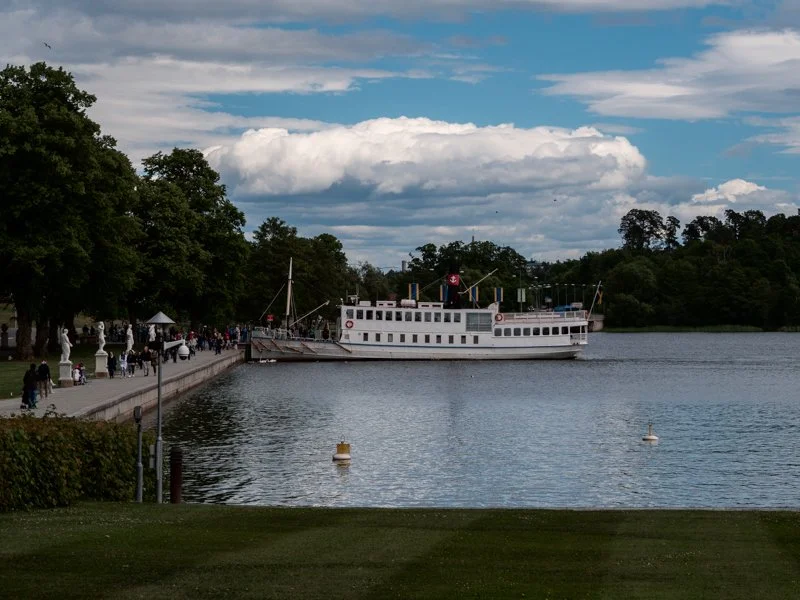
The Scenic Ferry (Recommended, May–October): Board a century-old steamer operated by Strömma at Klara Mälarstrand (near Stockholm City Hall). The boat ride takes roughly 50–60 minutes, winding through the quiet waters and small islands of Lake Mälaren.
Ferry Departure Point: Klara Mälarstrand (near Stockholm City Hall) via Strömma steamer (approx. 50–60 minutes duration).Public Transit (Year-Round & Budget-Friendly): Take the Green Line metro from T-Centralen to Brommaplan, then transfer to Bus 176, 177, 311, or 312 directly to the Drottningholm stop. Total travel time is under 60 minutes.
Parking: On-site parking available at Karusellplan for 15 SEK/hour. Please check the prices in parking apps!
Private Transfers: We handle all the transportation logistics for your family or group with complete ease. From executive cars and spacious coaches to private yacht charters, we have you covered.
Opening Hours & Best Time to Visit
May to September: Daily 10:00–17:00. Peak season with operating fountains and open seasonal pavilions.
October & Winter Months: Main Palace open weekends (10:00–16:00) and select holiday periods. Outer park grounds remain open daily.
Best Season: Late May through August for blooming chestnut trees, outdoor dining at Cafe Karamellan, and sunny canal boat rides.
Guided Tours to Drottningholm
If you are traveling independently, you can join public guided tours arranged directly by Drottningholm Palace in English and Swedish. Please keep in mind that these group tours frequently sell out. We can secure your spots at your preferred time to ensure you don't miss out!
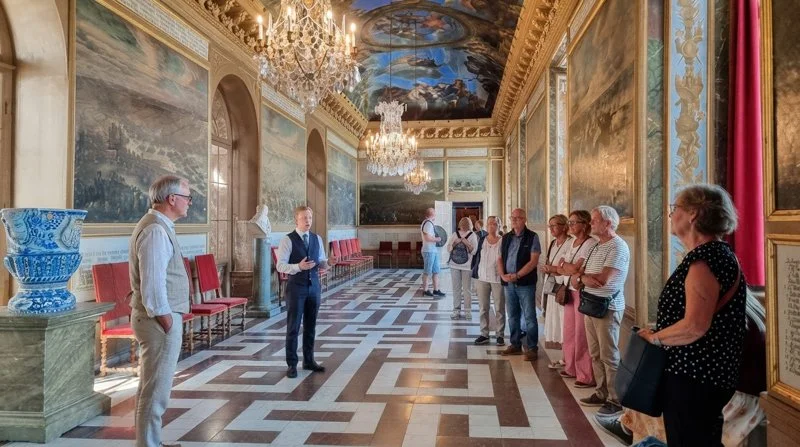
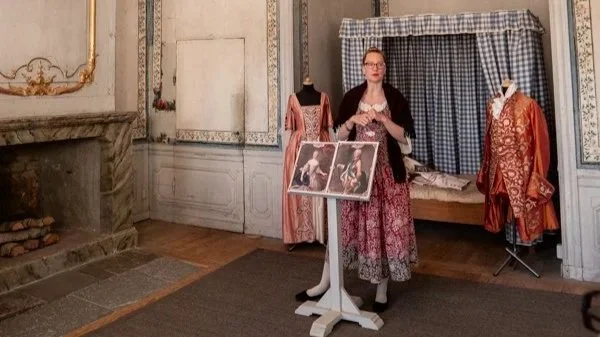
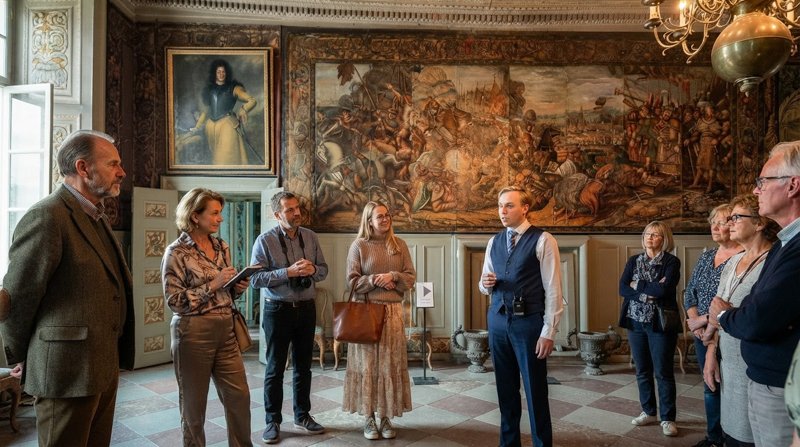
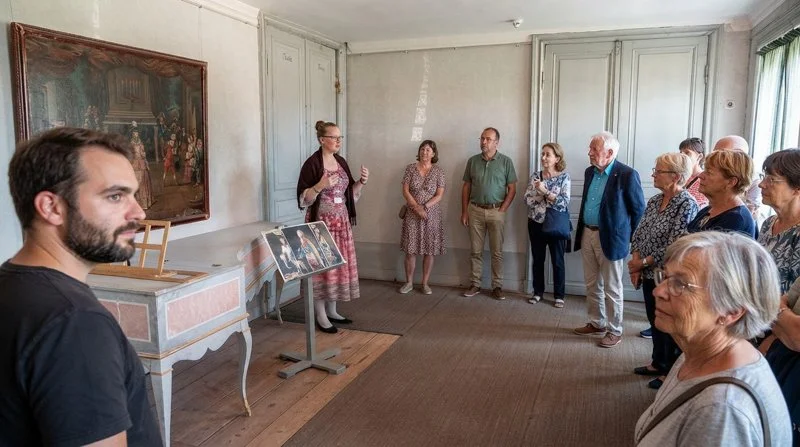
We also organize private guided tours in a variety of languages, including German, Italian, Spanish, French, and many others. Visit the Royal Apartments, the Royal Theatre, the Chinese Pavilion, and the grounds with us!
Audio Guides & Mobile App for Independant Travellers
For independent travelers, download the official 'Swedish Royal Palaces' in App Store or Google Play before arriving. It offers self-guided GPS audio routes through the World Heritage park, covering the palace grounds, garden architecture, and sculpture highlights.
Frequently Asked Questions (FAQ)
Q: How do I get to Drottningholm Palace from Stockholm central station?
A: You can take the Green Line Metro to Brommaplan and catch Bus 176 or 177 directly to the palace (under 30 minutes). In summer, you can also take a 1-hour Strömma ferry from Klara Mälarstrand near City Hall.
Q: Is Drottningholm Palace open year-round?
A: The outer park and gardens are open daily year-round free of charge. The main palace is open daily May–September and on weekends during winter.
Q: Is Drottningholm Palace worth visiting compared to the Royal Palace in Gamla Stan?
A: Yes. While the Royal Palace in Gamla Stan is larger and more central, Drottningholm offers an authentic estate experience with lake views, formal Baroque gardens, an intact 18th-century theater, and the Chinese Pavilion.
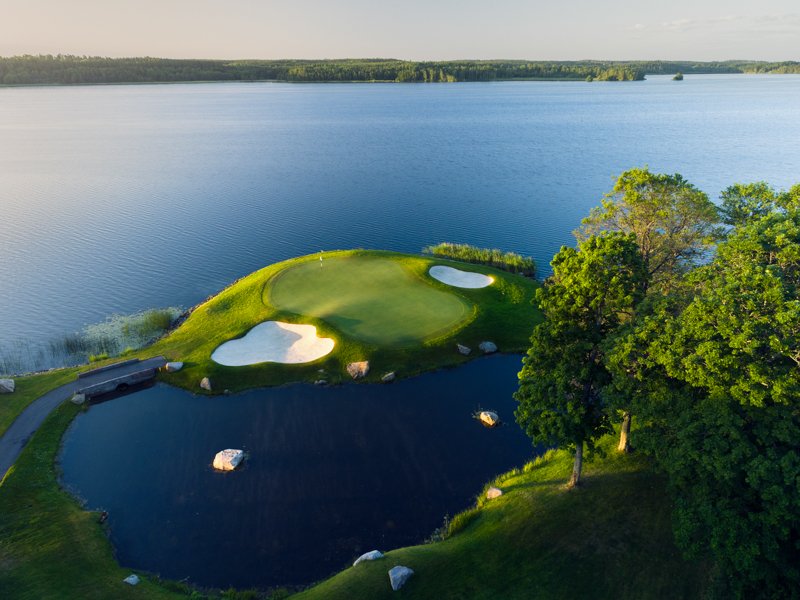
Ullna Golf & Country Club: Why This Jack Nicklaus Masterpiece is one of the Best Courses in Stockholm
When discerning travelers search for the best golf courses in Stockholm, one name consistently rises to the top: Ullna Golf & Country Club (Ullna GK).
For clients of Sweden Tours DMC, a round at Ullna is the crown jewel of any Scandinavian golf itinerary. Here is why this legendary club remains at the top of every golfer’s bucket list.
If you’re looking for a place to play in Stockholm, Ullna Golf & Country Club is usually one of the first names that comes up. It’s only about a 15-minute drive from the city center, so it's perfect if you want to experience both the urban vibes of Stockholm and the joy of the game.
The course is famous for having some of the most scenic fairways in Sweden, but don't let the views distract you – it’s incredibly punishing. While there’s no strict handicap limit to get on the green, you’ll definitely enjoy it more if you’ve got some experience under your belt. It’s tight, tricky, and has a habit of eating up golf balls if you're not careful.
For anyone planning a golf trip through Scandinavia, Ullna is a non-negotiable stop. Let’s try to decipher how they’ve maintained such a high reputation and why the club remains at the top of everyone’s list.
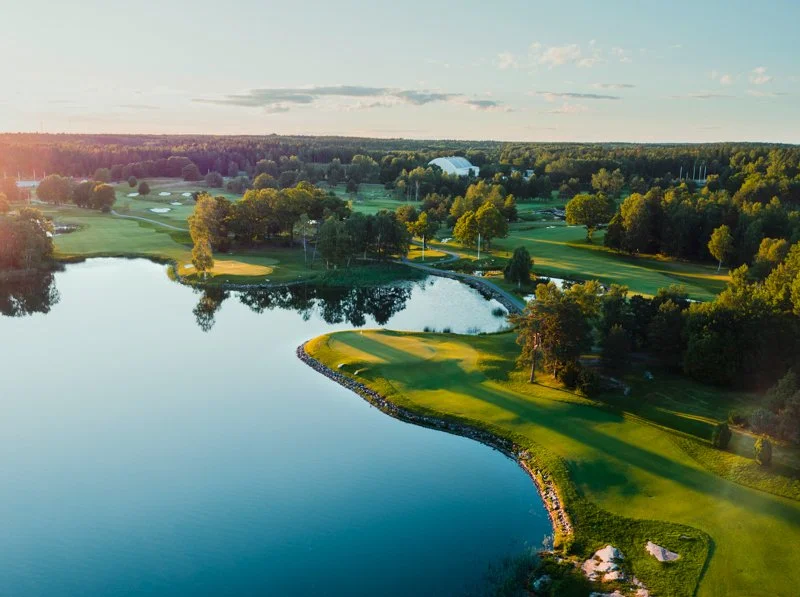
Ullna Golf & Country Club/Jacob Sjöman
The course at Ullna GC
Ullna is actually the only course in Sweden with the Jack Nicklaus signature on it. It all started back in 1981, thanks to Sven Tumba. If you’re Swedish, you know him as a legend who somehow managed to be an icon in ice hockey, football, and golf all at once. His dream was to build a world-class "American-style" course right on the Swedish coast, and he definitely pulled it off.
But what you see today is a different beast. A few years ago, Nicklaus came back for a massive $6 million overhaul. They basically rebuilt the whole thing from the ground up – sand-capping every fairway and using a specialized "supergrass." The result? Fairways that stay firm and greens so fast they’ll catch you off guard if you aren't careful. It’s easily one of the best-maintained tracks in the country.
The Layout
The course is a mix of parkland and peninsula styles. About six holes sit right on the edge of Lake Ullna, which is beautiful but nerve-wracking, while the rest of the round winds through thick forest and over small, tricky streams.
One thing you’ll notice immediately are the signature "white marble" bunkers. They look incredible, but don’t let the aesthetics fool you — Nicklaus placed them exactly where your "safe" shot is supposed to land. It’s like he knew exactly where you’d try to miss.
The greens are another story. They’re small, tiered, and many have those notorious "false fronts." If your approach shot is even a yard short, you’ll have the heartbreaking experience of watching your ball roll 30 yards back down the fairway.
Course at Ullna Golf Club
So, why is Ullna such a challenging course?
If you ask any member what makes this place so tough, they’ll probably just point at the water and sigh. It’s everywhere. Since about half the holes run right along the banks of Lake Ullna, the water isn't just there for the photos — it’s an absolute ball magnet. On a windy day, it feels like the lake is actively trying to pull your ball in, and you’ll need some serious precision to stay dry.
The whole place is the definition of "target golf." There’s basically zero room for mistakes. Most of the time, you’re squeezed between thick forest on one side and the lake on the other, so you have to be very deliberate with every single club you pull from the bag.
Take the 3rd hole, for example. It’s a par-3 with a terrifying island green that hits you early in the round. There’s no "safe" miss there – it’s either the green or a splash.
Then there’s the famous 17th, often called the "Trevino Hole." The story goes that back in the 80s, Lee Trevino suggested a peninsula green during a visit. By the time he woke up the next morning, the bulldozers were already moving the dirt to make it happen. Today, it’s easily one of the most brutal par-4s in Sweden. You’re looking at a 200-meter carry over the water just to find the fairway. It’s the kind of hole that can ruin a good scorecard right at the end of the day.

Ullna Golf & Country Club/Peter Cordén
Why everyone calls Ullna "unforgiving"
In the golf world, when people say a course is "unforgiving," they usually mean your mistakes will cost you dearly. At Ullna, that’s an understatement. There’s no such thing as a "lucky bounce" here.
The reality is simple: it’s often "water or bust." On most courses, a bad slice just means playing from the rough. At Ullna, water is in play on 15 out of 18 holes. If you’re five yards off the fairway on holes like the 3rd or the 17th, you aren't looking for your ball in the grass — it’s already at the bottom of the lake. There’s no "scrambling" from the middle of a pond.
It’s the ultimate "target golf" test. The landing zones are constantly pinched between the lake and the forest, which forces you to leave the driver in the bag and actually think. If you try to overpower this course, it’ll snap back at you instantly.
Then there’s the psychological side, like the 3rd hole. It’s a world-famous par-3 with a pure island green. Standing on that tee box is nerve-wracking because there’s literally nowhere safe to miss. Anything short, long, or wide is a lost ball.
Even the holes away from the lake aren't "soft." You’ve got narrow brooks and streams cutting across the fairways everywhere. You’re constantly forced to decide: do I lay up or go for it? If you commit to a shot half-heartedly at Ullna, you’re almost guaranteed a double bogey.
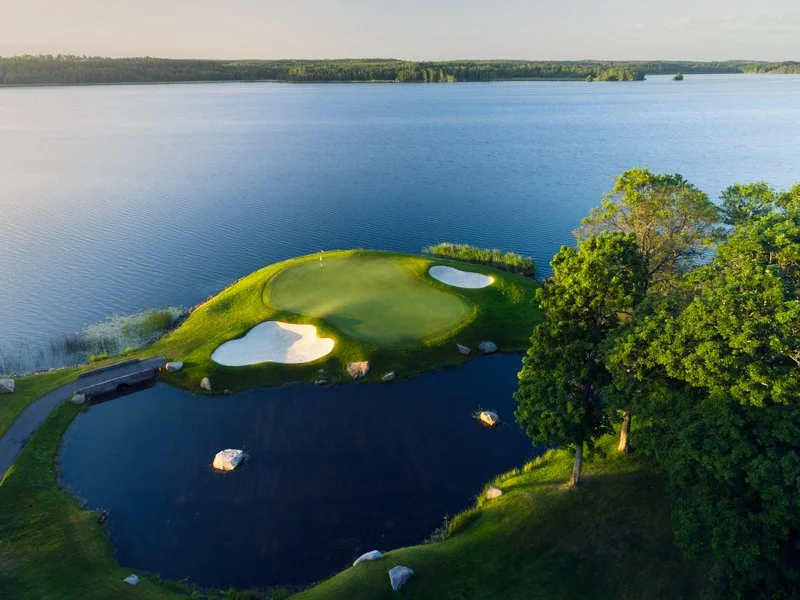
Ullna Golf & Country Club/Jacob Sjöman
Why is Ullna GK Rated So High?
There’s a reason Ullna is always ranked in the Top 3 in Sweden and sits comfortably among the best in Europe. It isn't just about the layout; it’s the whole atmosphere.
First off, the conditioning is arguably the best in the country. People often compare the fairways and greens to Augusta National, and they aren't exaggerating — the surfaces are immaculate. Then there’s the history. The club has a serious tournament pedigree, having hosted everything from the European Tour to the Eisenhower Trophy. Even Tiger Woods has been here, famously competing as a team captain during the SAS Invitational.
The experience doesn’t end on the 18th green, either. The whole setup feels premium, from the award-winning restaurant overlooking the water to the sleek, cashless clubhouse. Every detail is handled with a level of care you just don't see everywhere.
Ultimately, Ullna is widely considered the toughest test in Stockholm because it demands your full attention for four hours straight. It’s not the kind of place that forgives a lapse in focus or rewards an "almost good" shot. It’s a course built for bold players, but in the end, it only rewards the ones who are precise.

Ullna Golf & Country Club/Peter Cordén
Ranked Among the Elite
It’s not just local hype — Ullna’s reputation is backed by pretty much every major golf publication out there. You’ll consistently find it in the Top 5 in Sweden in Golf Digest, and it’s a regular on the "Top 100 in Europe" lists.
The tournament history here is just as impressive. This isn't a course that just looks good; it’s been tested by the best.
It hosted the Scandinavian Enterprise Open back in the day with stars like Sam Torrance and Ian Woosnam, and more recently, it was the stage for the 2023 Volvo Car Scandinavian Mixed on the DP World Tour. And of course, there’s the famous SAS Invitational, where even Tiger Woods showed up to compete. When you’re walking these fairways, you definitely feel like you’re following in some legendary footsteps.
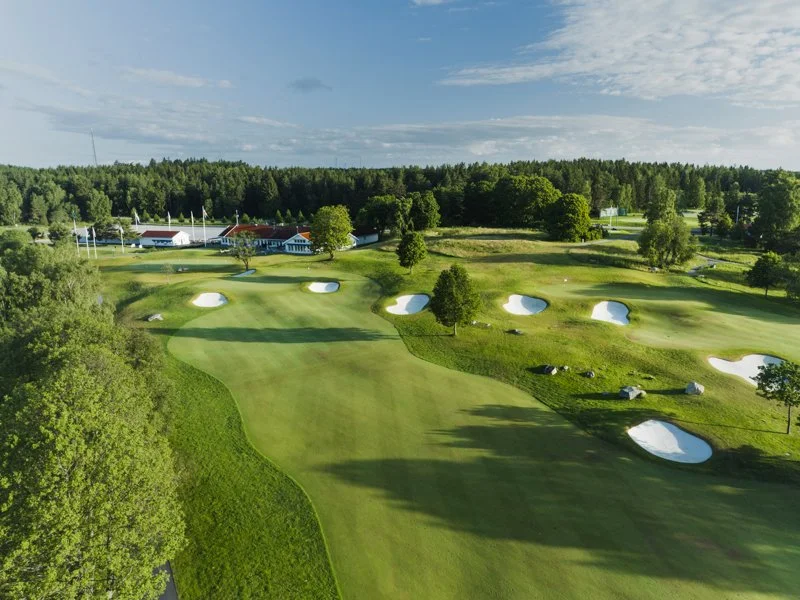
Ullna Golf & Country Club/Jacob Sjöman
The Survival Guide to Ullna: How to Outsmart Sweden’s Most Unforgiving Course
Playing Ullna isn’t about how far you can bomb your driver; it’s more of a high-stakes negotiation with the water, and the lake usually has the upper hand. If you want to walk off the 18th green with your scorecard (and your sanity) intact, you’re going to need a cold-blooded strategy.
Here is how you actually survive a round at Stockholm’s toughest track.
Don't Try to Be a Hero on the 3rd
The 3rd hole is a legendary par-3 with a pure island green, and it’s where many rounds go to die early. The biggest mistake is aiming at the flag. The wind coming off Lake Ullna is deceptive — it tends to grab the ball just as it starts to drop. The play: Forget the pin. Aim for the "fat" part of the green where there’s plenty of room to land. A boring two-putt par here feels like a birdie. If you do find the water, don’t let it get in your head; take your drop and move on before it ruins your entire front nine.
Adopt the "Target Golf" Mindset
Ullna is a classic peninsula course, which is just a fancy way of saying land is at a premium. On narrow holes like the 5th or the 8th, do yourself a favor and leave the driver in the bag. The course is designed to punish "sprayers" instantly. The play: Play for position. Ask yourself where the widest part of the fairway is and aim there. Even if it leaves you a longer approach shot, being on the short grass is 100% better than taking a penalty stroke from the lake.
Respect the Nicklaus Greens
The greens here are lightning-fast and famous for their dramatic tiers. If you end up on the wrong level, a three-putt is almost a guarantee. Jack Nicklaus loved hiding pins behind deep bunkers or right on the water’s edge. The play: Always aim for the front-middle. At Ullna, a "safe" shot to the center of the green is the mark of a veteran player, not a coward.
Conquering the "Trevino" 17th
The 17th is a pure test of nerves. You’re looking at a long carry over the lake to a fairway that feels about as wide as a strip of ribbon. The temptation to "cut the corner" over the water is huge, but the wind is always stronger than it feels on the tee box. The play: Trust your yardage and aim further right than you think you need to. It’s much easier to save par from the grass with a long iron than to try and hit a miracle wedge out of the lake.
When in Doubt, Aim for the Bunkers
This might sound strange, but the bunkers at Ullna are actually your friends. They use crushed white marble, which is heavy, consistent, and much easier to play out of than the thick, unpredictable rough. The play: If you’re faced with a choice between a watery grave or a Nicklaus bunker, choose the sand every time. It’s predictable, high-quality, and gives you a much better chance of saving your par.
A few last tips for the road:
Pack extra balls: Even the pros lose a few to the lake. Don't let it hurt your pride.
Watch the ripples: The lake has its own micro-climate. Ignore the clouds — watch the ripples on the water to see what the wind is actually doing.
The 19th Hole: Once you've survived the 18th, head straight to the clubhouse restaurant. It’s consistently rated the best in Sweden, and after a round like this, you’ve definitely earned a drink with a view.

Ullna Golf & Country Club/Peter Cordén
Experience Ullna with Sweden Tours DMC
At Sweden Tours DMC, we’re all about creating golf experiences that go way beyond just booking a tee time. For us, a day at Ullna isn't just about what you shoot on the course; it’s the whole atmosphere — from those pristine, "mint condition" fairways to a slow lunch at the award-winning restaurant overlooking the water. There’s a certain weight to the place, knowing you’re walking the same lines once played by Nicklaus and Woods.
Whether you’re putting together a high-end corporate retreat or a quiet, private tour of Stockholm’s best fairways, Ullna is the one spot you simply can't skip. We’ll handle the logistics; you just focus on staying out of the water.
Want to know more about golfing around Stockholm? Check out Stockholm Golf Package!
Ullna is waiting. Reach out to our team to start planning your Swedish golf itinerary.